Animals feel, just as we do
They want to live. They can feel fear, pain and stress, and they try to escape danger. Their feelings are no less real because they are not human.
Animals feel pain, fear, stress and panic. Their suffering is immense. The fact that we find something tasty, convenient or normal does not make their suffering any less important—especially when animal products are not necessary for a healthy life.
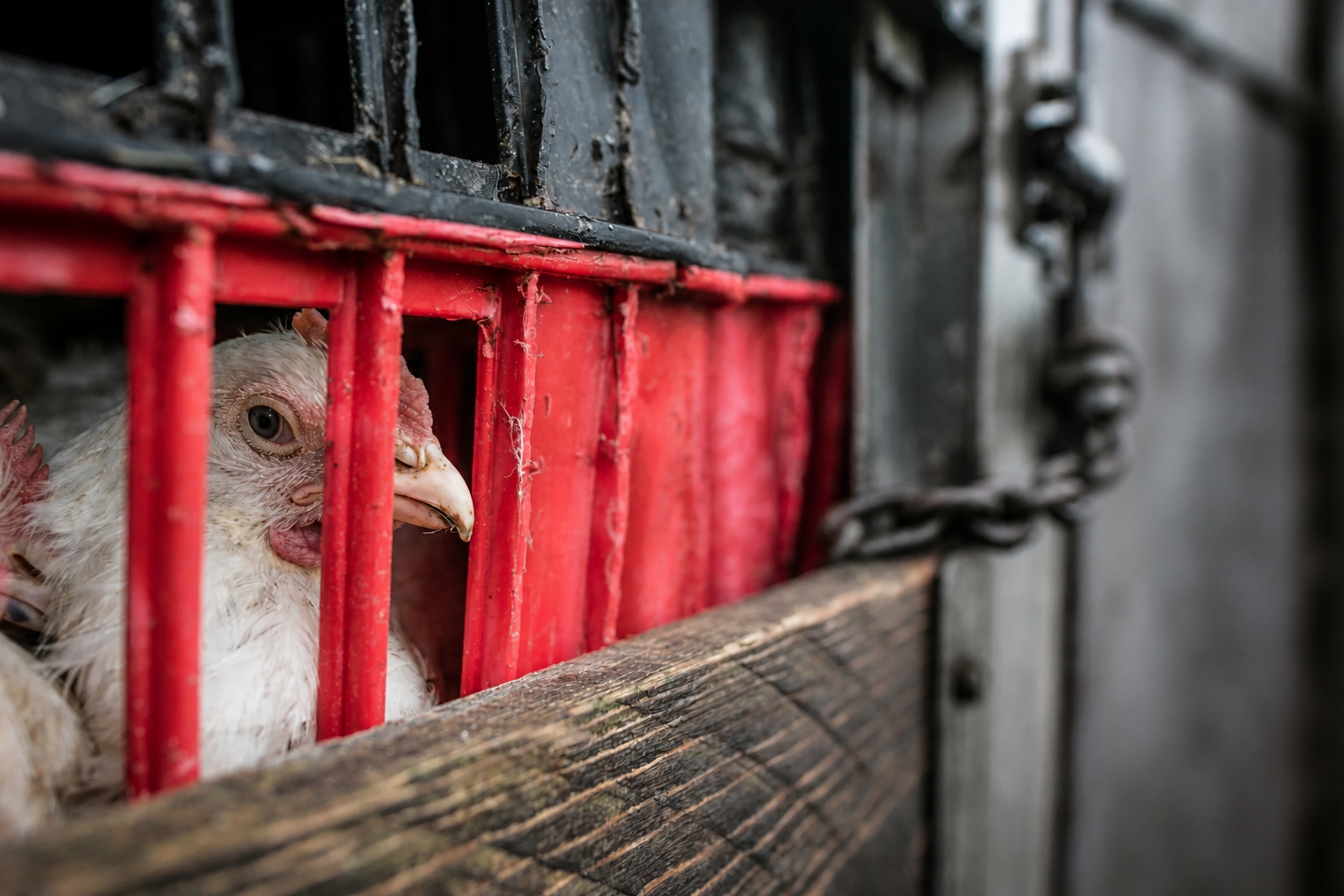
We owe it to animals to face the suffering we cause them. This page is intended to show what animals endure for the production of animal products. Hopefully, it helps us realise that we do not want to contribute to this and that choosing plant-based is the most logical and compassionate option.
Below are examples. Open a topic to learn more.
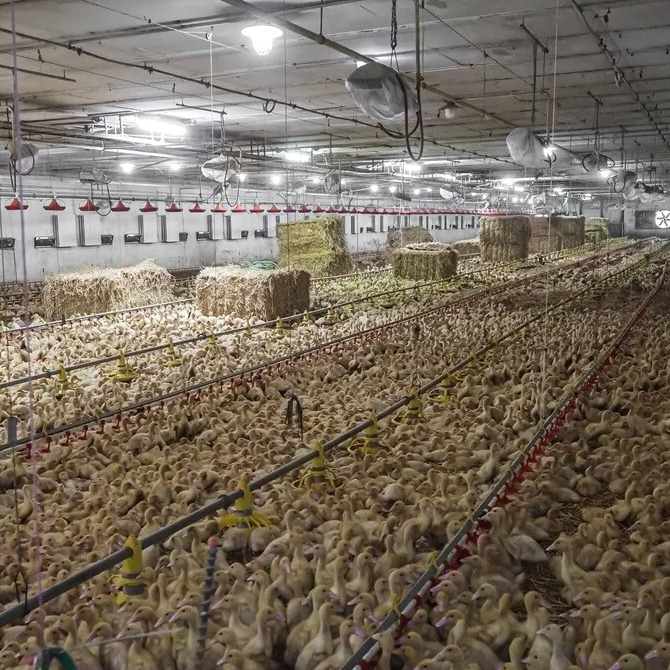
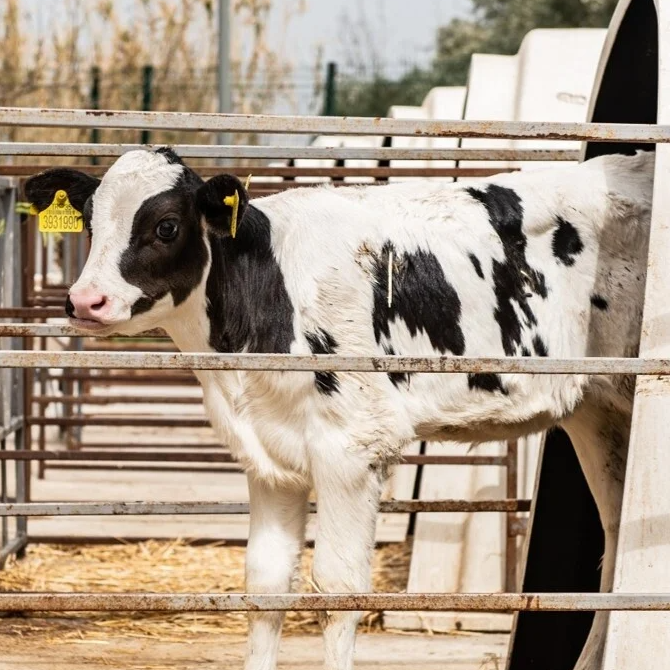
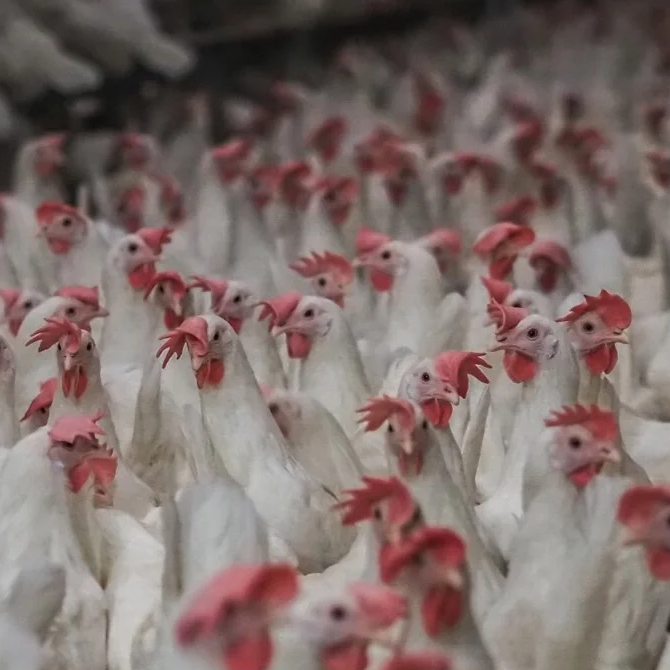
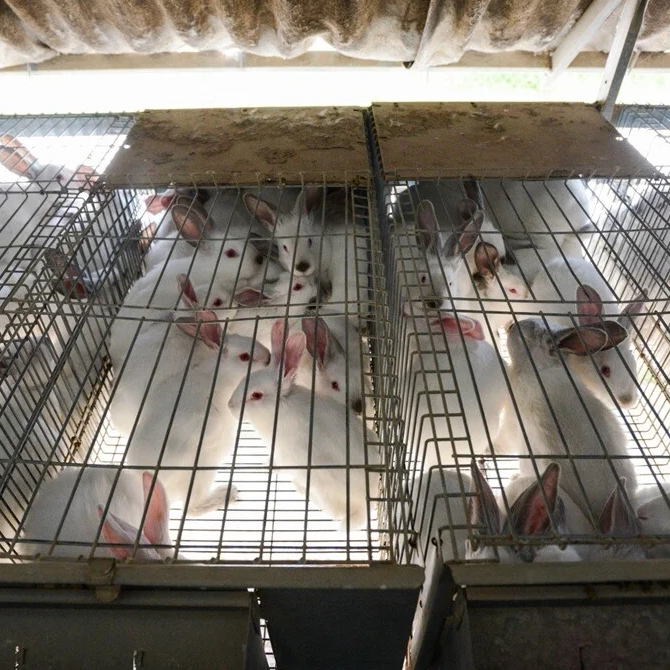
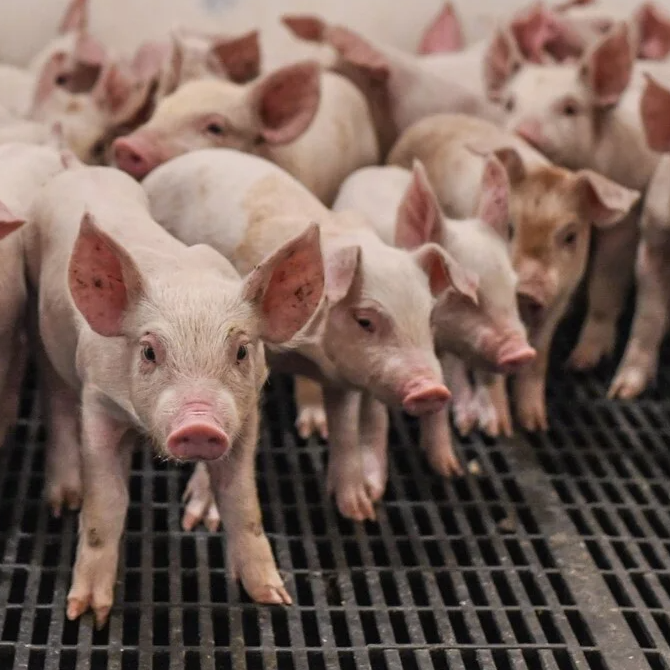
Animals often live in spaces where they can barely do what comes naturally to them. They cannot freely roam, forage, play, rest, hide, swim or choose social contact as they would themselves.
Their world is reduced to a barn, shed, pen or cage. For an individual who wants to move and explore, that means a life of severe restriction.
Many animals are packed closely together. This causes stress, frustration, injuries and conflict. There is barely any room to move, rest or get away from others.
When animals injure one another out of frustration, the environment is often left unchanged and the animal’s body is altered instead.
Some animals are kept alone instead, such as young calves or mother pigs during certain stages. Social contact, protection and natural behaviour are then severely restricted.
For social animals, isolation can cause stress, fear and frustration.
Slatted floors, concrete and bare surfaces can cause painful feet, wounds and joint problems. Animals often cannot lie down or walk in ways that are healthy for their bodies.
Cleanliness matters to animals too. Yet many live among manure, urine and ammonia fumes. This can cause irritation, respiratory problems, infections and stress.
A dirty, stifling environment is not a temporary discomfort for them, but their everyday reality.
Curious animals are often given little to explore or do. Boredom is not harmless: it can lead to stress, apathy and abnormal behaviour.
Many animals spend their entire lives indoors, sometimes without real sunlight, grass, fresh air or changing seasons. For some, the journey to the slaughterhouse is one of the few times they ever see outdoor light.
Animals are bred for production: more meat, more milk, more eggs and faster growth. Their bodies often pay a high price.
Some animals grow so quickly that their legs, heart and organs can barely keep up. Many suffer pain or die before they even reach slaughter.
Machines, fans, shouting, other animals and loud noises can create constant tension. Stress is no longer a momentary experience, but the environment the animal lives in.
In large groups, disease can spread quickly and individual animals are easier to overlook. An animal in pain or with injuries may wait a long time for help, or receive no meaningful help at all.
Medical care takes time and costs money. In a system driven by output, the interests of a sick animal can easily become secondary.
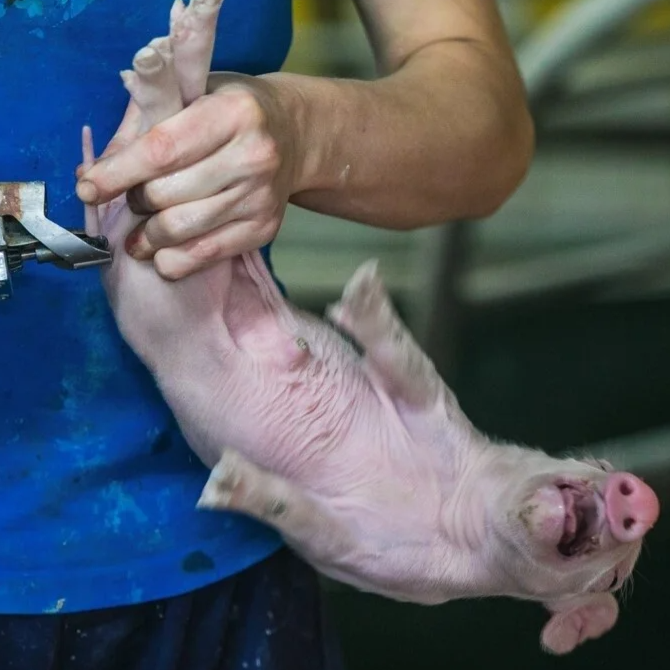
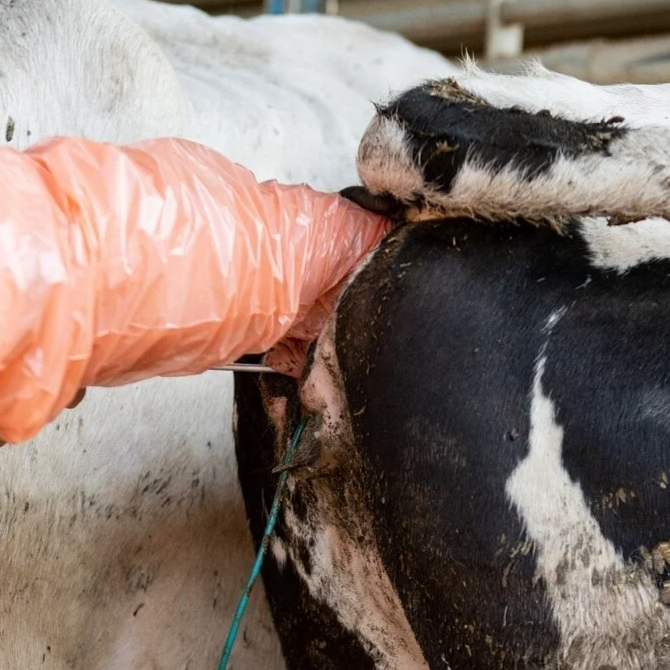
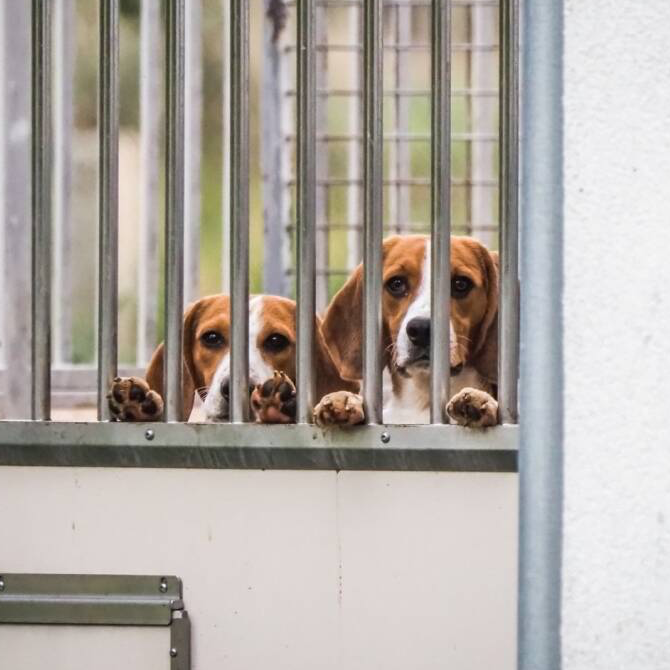
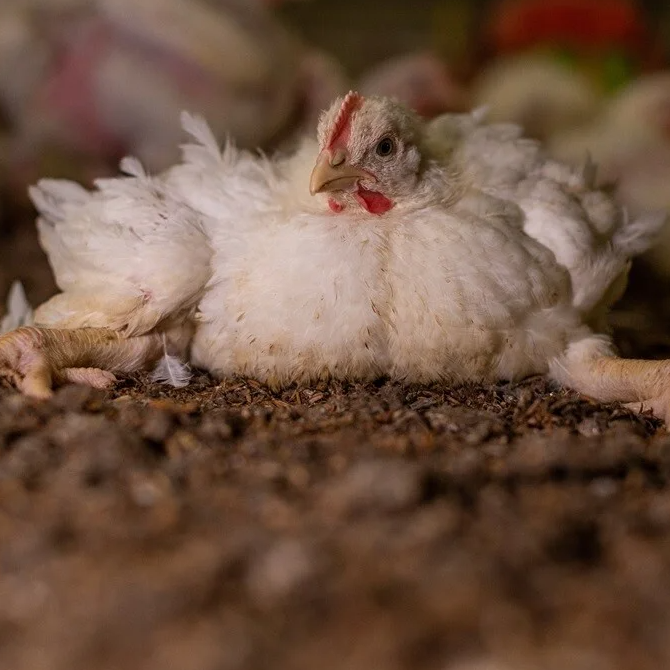
Some animals have their horns removed or prevented from growing. This is done because animals in unnatural environments may injure one another, but the problem is created by the system itself.
The procedure can cause pain, stress and lingering discomfort.
Tails and teeth are sometimes shortened to reduce injuries caused by stress-related behaviour. Instead of removing the source of stress, the animal’s body is altered to fit the industry.
This can be painful, especially when it is done without full anaesthesia.
Birds sometimes have their beaks treated to reduce pecking. But pecking often arises precisely because of crowding, stress and the lack of a natural environment.
Animals may be castrated to make their bodies better suited to human purposes. For the animal, this can mean pain, fear and stress during recovery.
Animals are registered and marked as though they were production assets. Ear tags can be painful, cause inflammation or tear out.
For the animal, this is not paperwork but a physical intervention in their own body.
Reproduction is controlled for production, not for the animal. Male animals are used for semen and female animals are inseminated because humans want milk, meat, eggs or offspring.
Their reproduction, pregnancy and motherhood become part of a production chain.
Animals are selectively bred into bodies that produce a great deal but suffer as a result. Their bodies may become too heavy for their legs, grow too fast for their organs or become exhausted by production.
The animal is shaped around human demands, not the animal’s well-being.
Animals are also used in research and testing. They may experience pain, fear, isolation and coercion while their bodies are used for human purposes.
Here too, the core issue is the same: a sentient individual is treated as a means to an end.
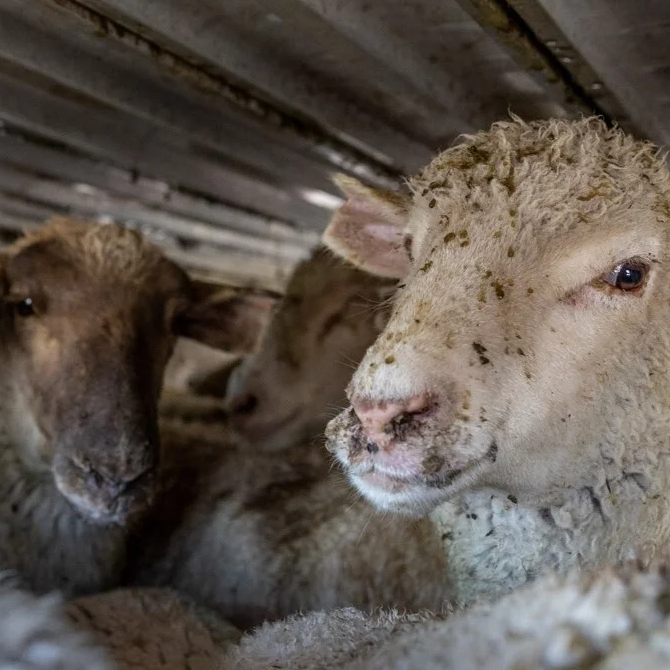
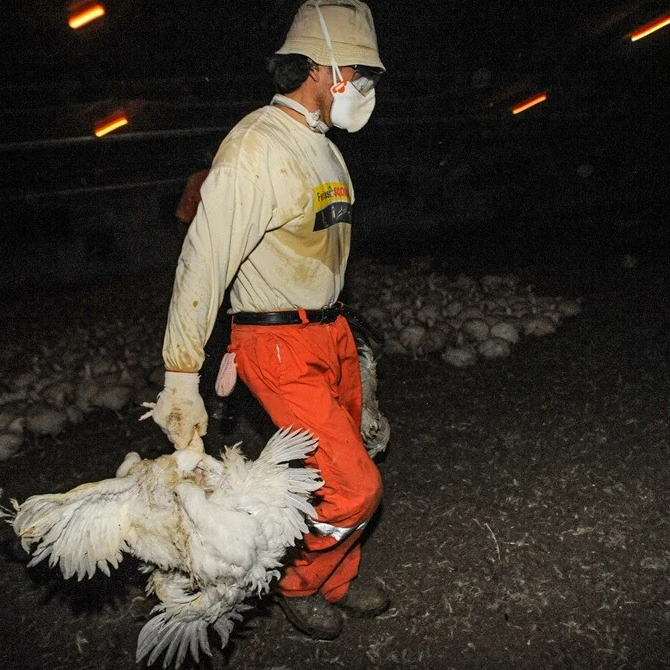
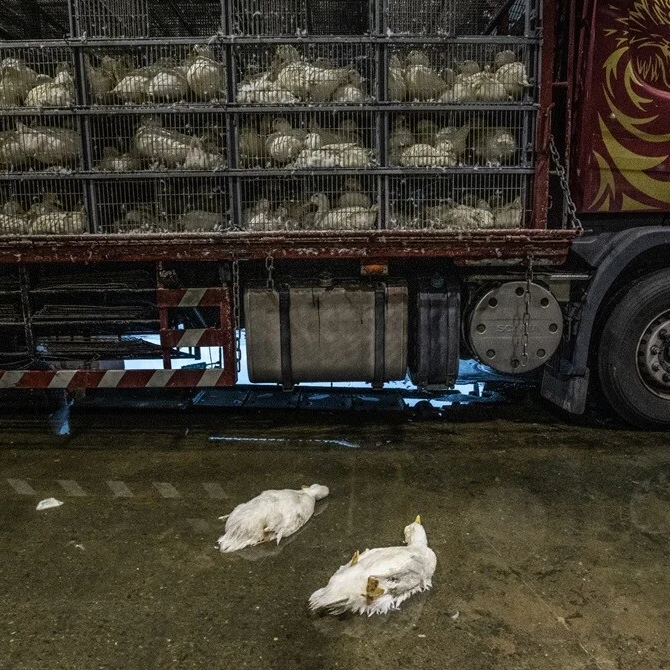
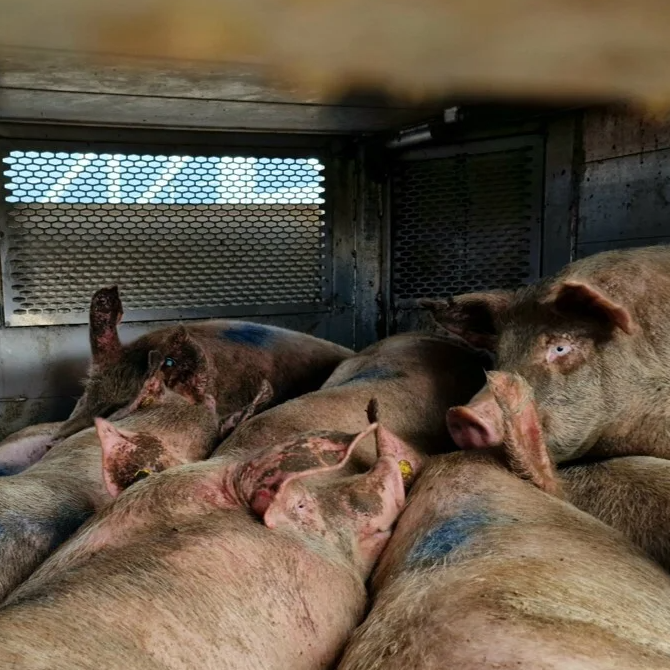
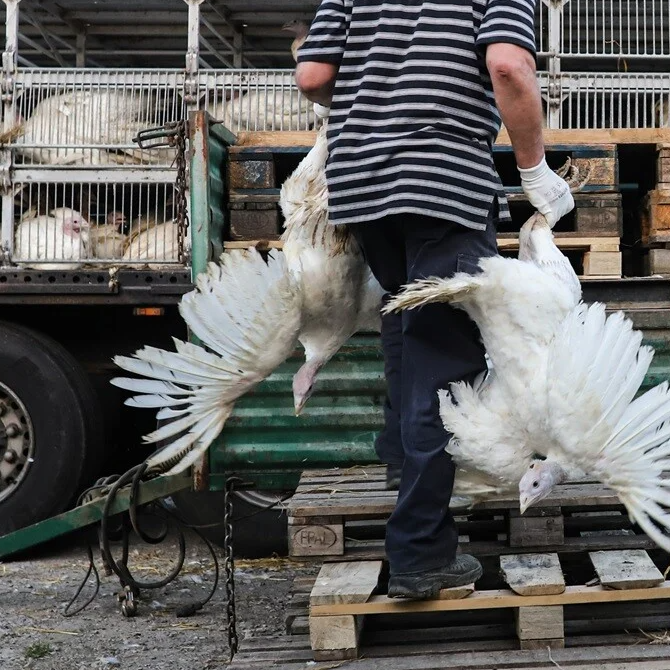
Animals are loaded into trucks, often with far too little space. They stand or lie pressed close together and have almost no control over where they are taken.
For many animals, transport is the transition from a restricted life to a frightening death.
Transport often takes place under time pressure. Animals may be pushed, pulled, hit or driven forward. For a frightened animal, this can be overwhelming.
Transport vehicles can become extremely hot or cold. Animals may experience thirst, breathing difficulties, exhaustion and panic while having nowhere to go.
Transport can last for hours. Animals endure noise, vibration and constant movement, often without rest or any control over their situation.
The smells, sounds, movement and panic of other animals make transport even more stressful. Animals do not understand why this is happening, but they can feel the threat.
During loading, transport and unloading, animals can fall, become trapped or suffer injuries. In crowded vehicles, there is little room to protect themselves.
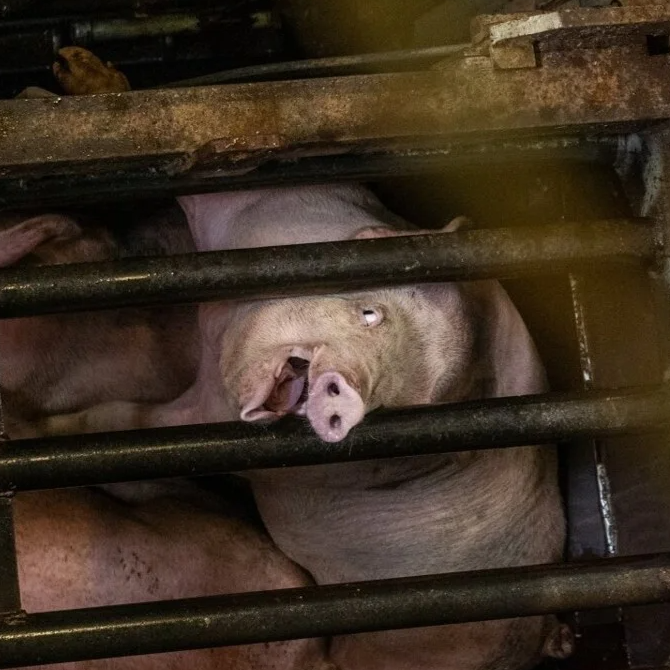
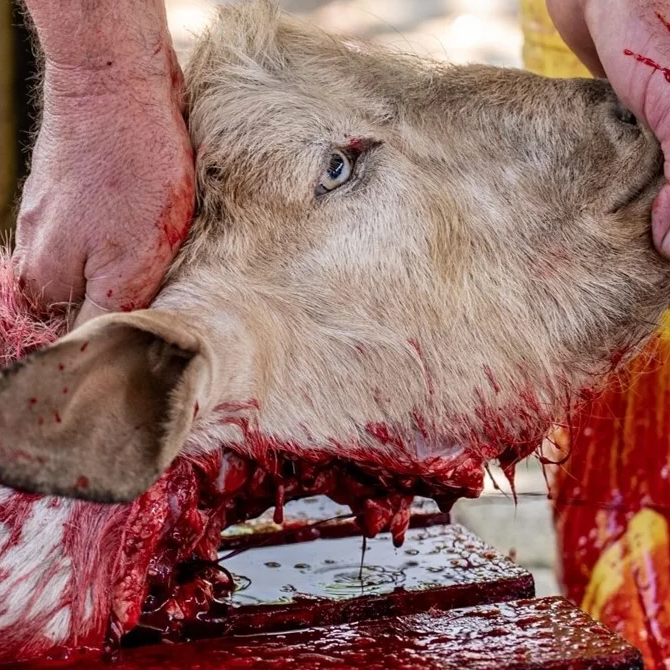
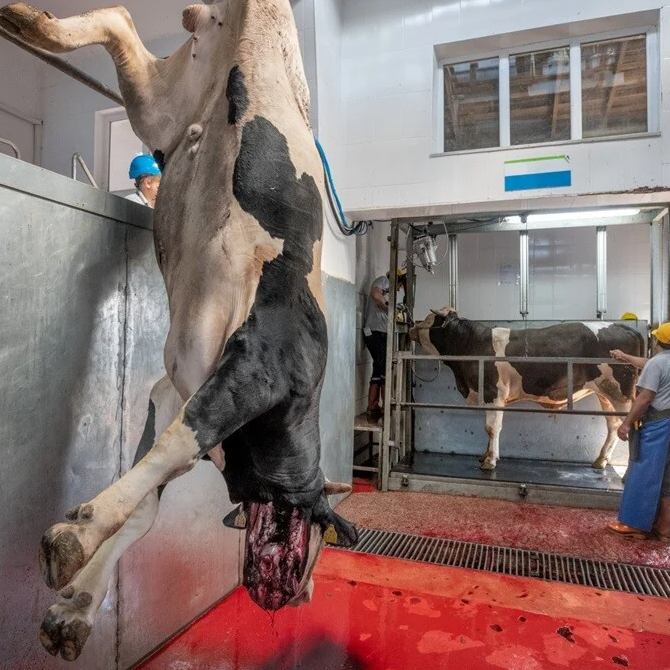
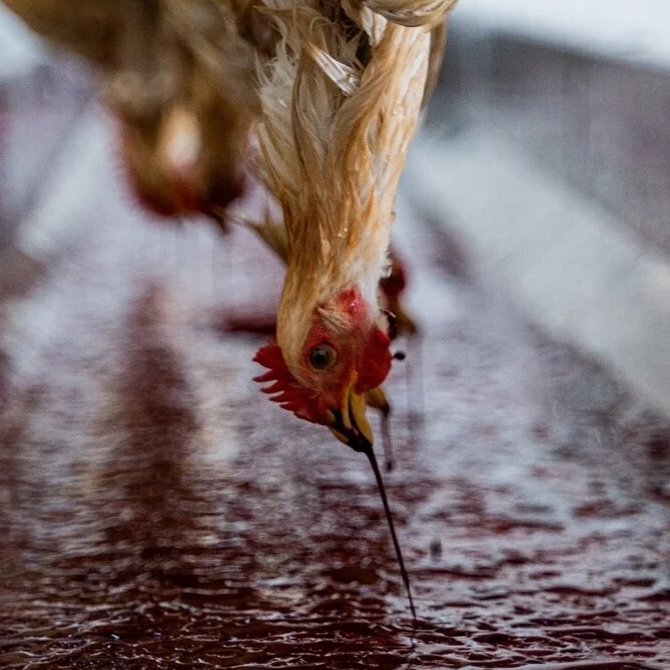
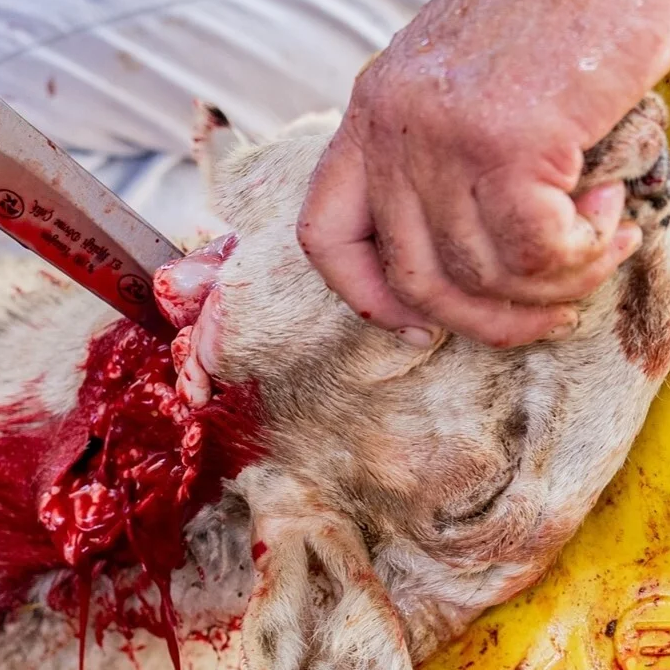
Animals wait in an environment filled with unfamiliar sounds, smells and fear. They may smell blood, hear or see other animals and often sense that they are in danger.
Sometimes animals see other animals die. They are not unfeeling or unaware: they can perceive panic, danger and death around them.
Inside the slaughterhouse, animals are moved through corridors, gates and systems towards their death. This often happens under pressure, in haste and through force.
For the animal, this is not a process but a series of frightening moments from which escape is impossible.
When animals are gassed, for example with carbon dioxide, the gas can cause burning and stinging sensations in the eyes, nose, throat and lungs.
The suffocation causes stress and panic. The animal tries to breathe, escape and make sense of what is happening.
Electrical stunning is used to render animals unconscious, but the process can be frightening and must be carried out correctly to avoid additional suffering.
When it goes wrong, electric shocks, muscle spasms, pain, fear and panic can become part of an animal’s final moments.
The slaughter process depends on speed and technique. If stunning does not work properly, an animal may still be conscious during subsequent steps.
The animal may then experience their death consciously, with fear, stress and pain.
Animals are sometimes hung up roughly. This is unnatural, painful and extremely stressful.
They can often smell, hear and see what is happening around them. Many animals sense danger and panic.
During slaughter, the throat is cut so that the animal bleeds out. Sometimes animals choke on their blood or are not yet fully unconscious.
For the animal, this is not an abstract stage of production but the end of a life.
A shooting method may be used for larger animals. If the shot is poorly placed or carried out incorrectly, the animal can experience additional pain and panic.
Many animals are killed while they are still very young. Chickens raised for meat often live only a few weeks; other animals are killed after just a few months.
They grow quickly because they have been bred to do so. Their lives are planned around the point at which their bodies are economically useful.
Sometimes animals are slaughtered while pregnant. This makes the situation even more distressing: not only the mother, but also the unborn young become part of the slaughter process.
Many animals are born into a system in which their death has already been decided. They are not welcomed as individuals, but as products with a planned end date.
It shows how deep the problem runs: from the very beginning, their lives are made subordinate to human consumption.
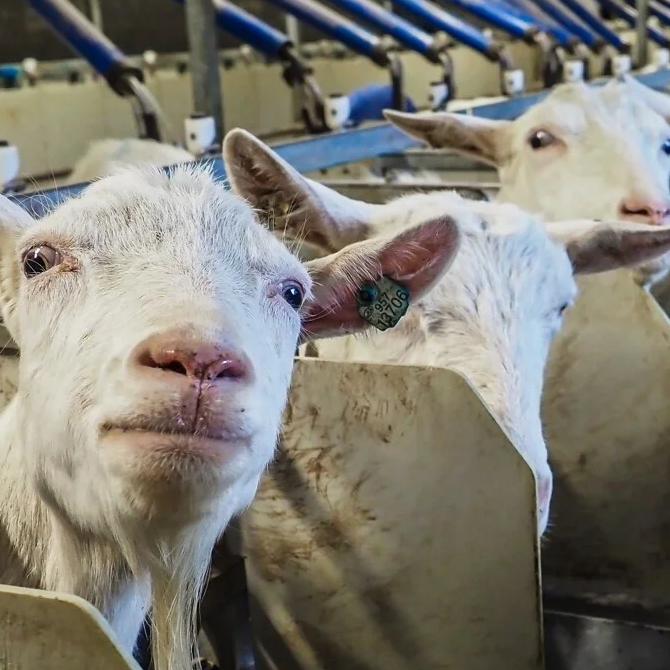
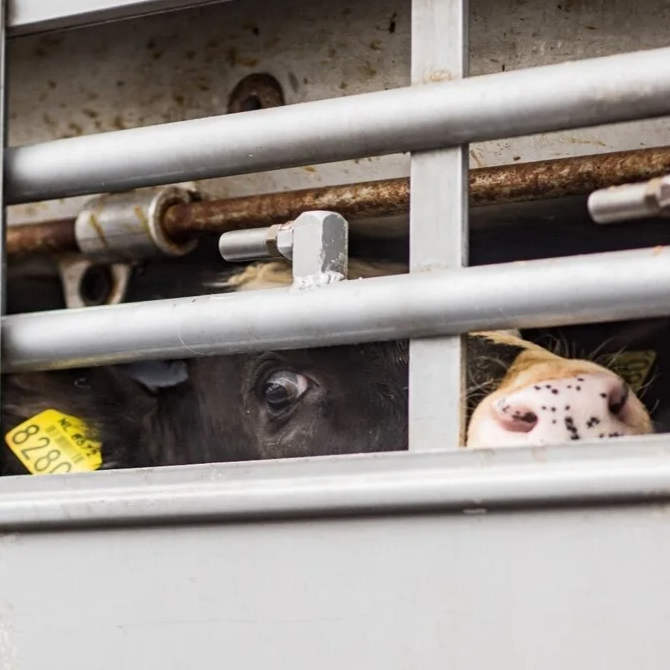
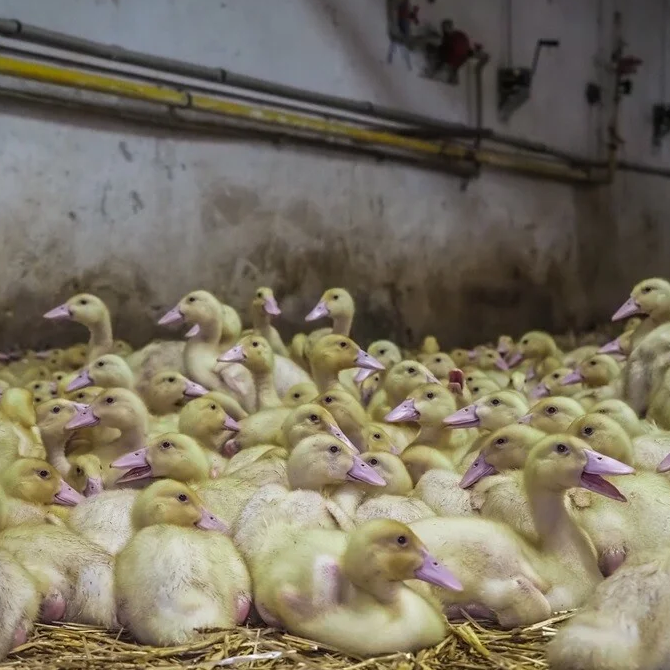
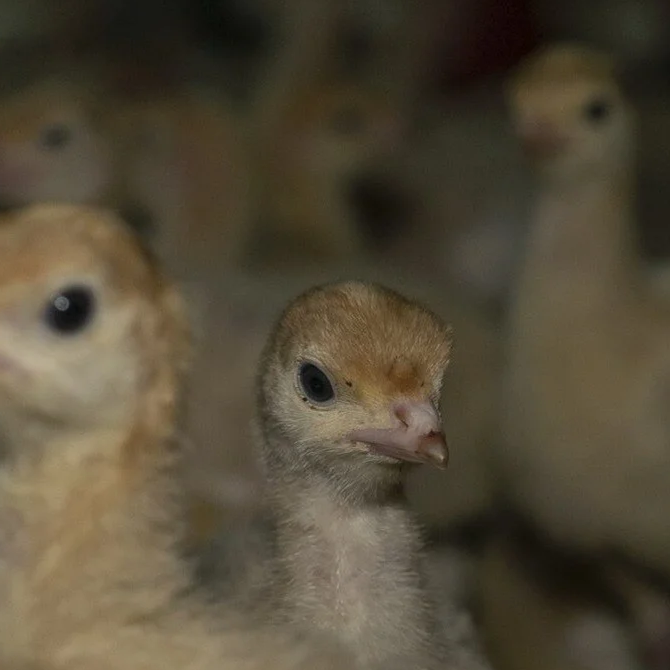
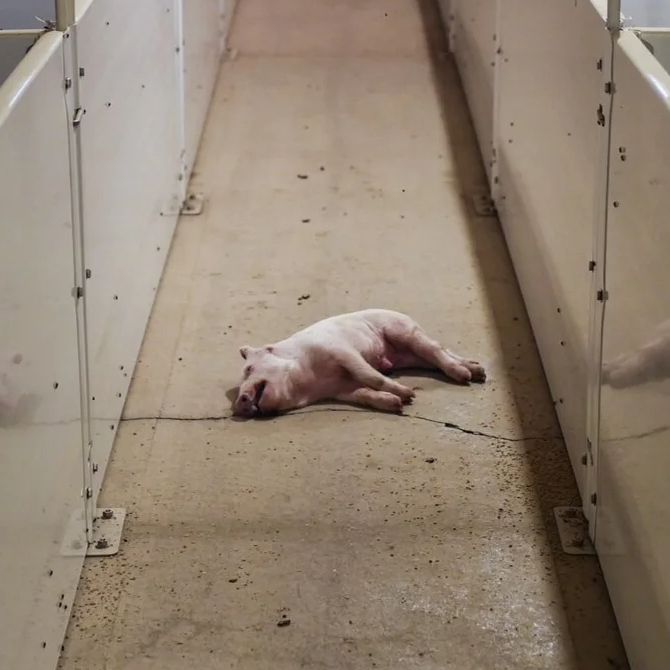
Across different species, mothers and their young are separated. This can cause stress, calling, searching and behaviours associated with distress.
Animals also form strong bonds. Breaking the bond between a mother and her young is not a minor detail to them, but a loss.
Milk exists because a mother has given birth to a young animal. In the dairy industry, that motherhood becomes part of production.
The calf or other young animal is often taken away so that humans can use the milk.
In the egg industry, female chickens lay eggs. Male chicks do not, and are therefore often considered economically unwanted.
They are therefore killed shortly after hatching, for example by gassing or maceration. Their lives are ended because they do not fit the business model.
Animals are killed when they no longer generate enough money. This includes dairy cows who produce less milk, laying hens who lay fewer eggs, or male animals who do not fit milk or egg production.
Their value is determined not by their own lives, but by their usefulness to humans.
Animals may be used for years for milk, eggs, breeding or wool. Their bodies are used for human products, often until they no longer produce enough.
Sheep’s wool, bees’ honey, birds’ feathers, goats’ and cows’ milk, chickens’ eggs, and animals’ hair or skin are treated as though they naturally belong to us.
But an animal’s body, and what comes from it, belongs first and foremost to the animal.
After death, animals are cut into pieces, packaged and sold. Humans are buried or cremated, but animals are often reduced to body parts.
Phrases such as “my piece of meat” hide the fact that it was once an individual with a body of their own.
Many animal products are wasted. An animal may then have lived a life full of fear, restriction and pain for something that is ultimately thrown away.
That makes the waste even more bitter: it was not only food that was wasted, but a life.
Animals recognise one another and can form bonds. Moving, selling, separating and slaughtering them repeatedly breaks those bonds.
The animal does not choose where they live, who they live with, when they reproduce, when they are transported or when they die. Everything is decided for them.
In that sense, we treat animals as our slaves: their bodies, reproduction, labour and death are organised for human benefit.
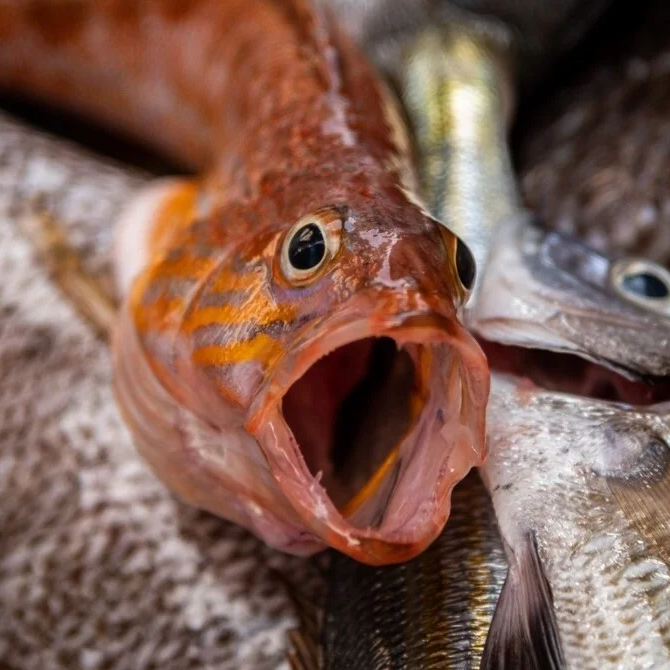
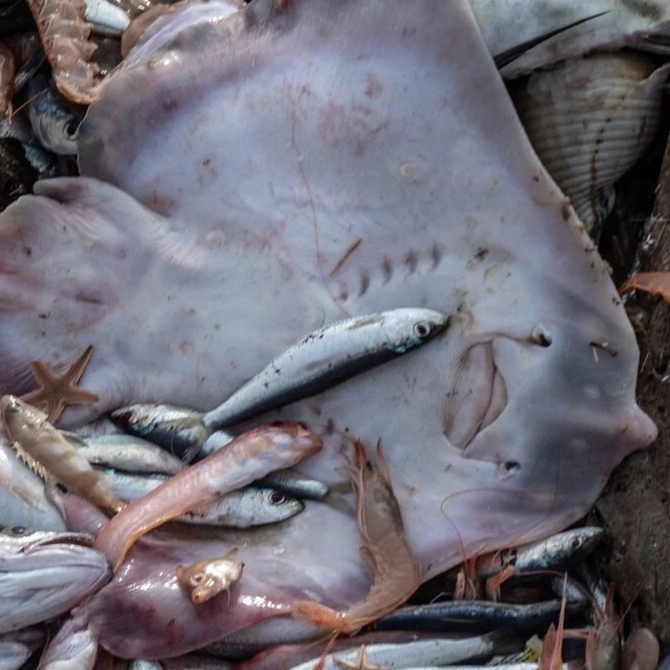
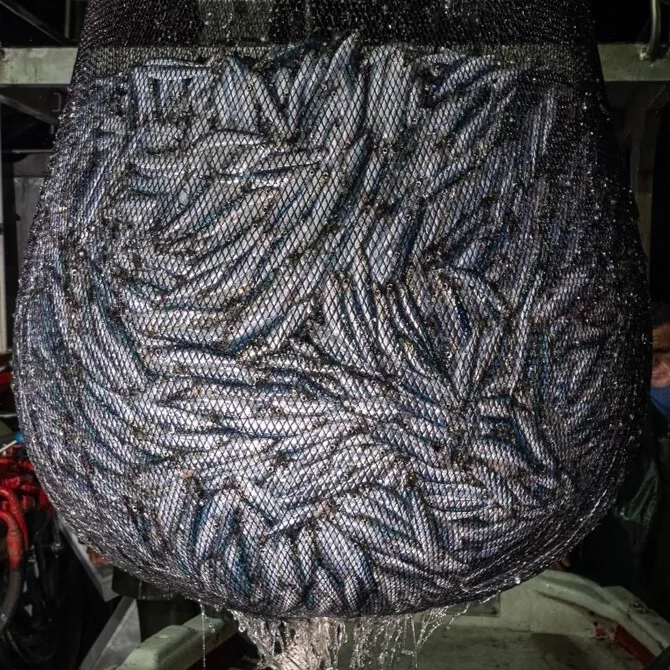
Fish are often treated as though they cannot feel. But they can experience stress and pain. Being taken out of the water can mean a slow and frightening suffocation.
In nets, fish can be crushed, injured and dragged along. For each individual animal, this is an experience of panic and pain.
Alongside the animals intentionally caught, other animals become entangled or are killed as well. Their suffering often remains unseen.
Bodies are used for wool, down, leather and other materials. Even when the finished product feels soft or luxurious, the path to it can be harsh for the animal.
Leather, fur and other animal-derived materials become shoes, coats, bags or accessories. As a result, we often stop seeing the animal as an individual and see only a material.
But you are not simply wearing a fabric. You are wearing the skin of someone who wanted to live.
Perhaps this is the basis of all the other suffering: a sentient being is seen as a product, inventory, raw material or source of profit.
The most serious point is not only how animals suffer, but that this suffering is often unnecessary. We can live healthily on a well-planned plant-based diet.
If we can live without animal products, then their lives deserve to matter more than our habits.
An animal is first confined, used, killed, cut into pieces, eaten and ultimately excreted. That sounds harsh, but it shows how completely an individual can disappear into human consumption.
The question is: would we want someone to treat our body and our life that way?
The number of animals we kill is almost impossible for our minds to comprehend. Every one of them is an individual—a living being with a personality, emotions, a unique experience of the world and a will to live. The counter below shows how many animals have been killed since you opened this page. Choose plant-based and make sure that you, at least, no longer contribute to this count. Together, we can make the world a little kinder and more animal-friendly.
The land-animal counter is an estimate based on the approximately 88 billion land animals killed each year (Our World in Data). The fish counter is based on an estimate of 1.6 trillion fish—1 trillion equals 1,000 billion—caught from the wild each year (scientific article). Fish killed in aquaculture and victims of bycatch are not even included in these figures.
Every plant-based choice reduces demand for a system that confines, uses, transports and kills animals—for products we do not need. Choose plant-based and help prevent animal suffering.
Choose plant-based