Nutrients

Everything you need can be found in plants.

We have been taught that animal products are necessary. But that is not the case. Major health organisations state that you can live healthily on a well-planned plant-based diet. Animal products are therefore not necessary.

Healthy plant-based foods with vegetables, fruit, legumes and nuts
1

Nutrients are not only found in animals.

The animals we eat ultimately get their nutrients from plants too. So we can start closer to the source.

2

We have been told that animal products are necessary.

Milk for calcium is a familiar example. But calcium and other nutrients can also come from plant-based sources.

3

Millions of people eat fully plant-based.

Millions of people around the world eat fully plant-based, including elite athletes, bodybuilders, pregnant women and children.

Nutrients

Choose a nutrient.

Swipe or scroll horizontally

Type to quickly find the right card.
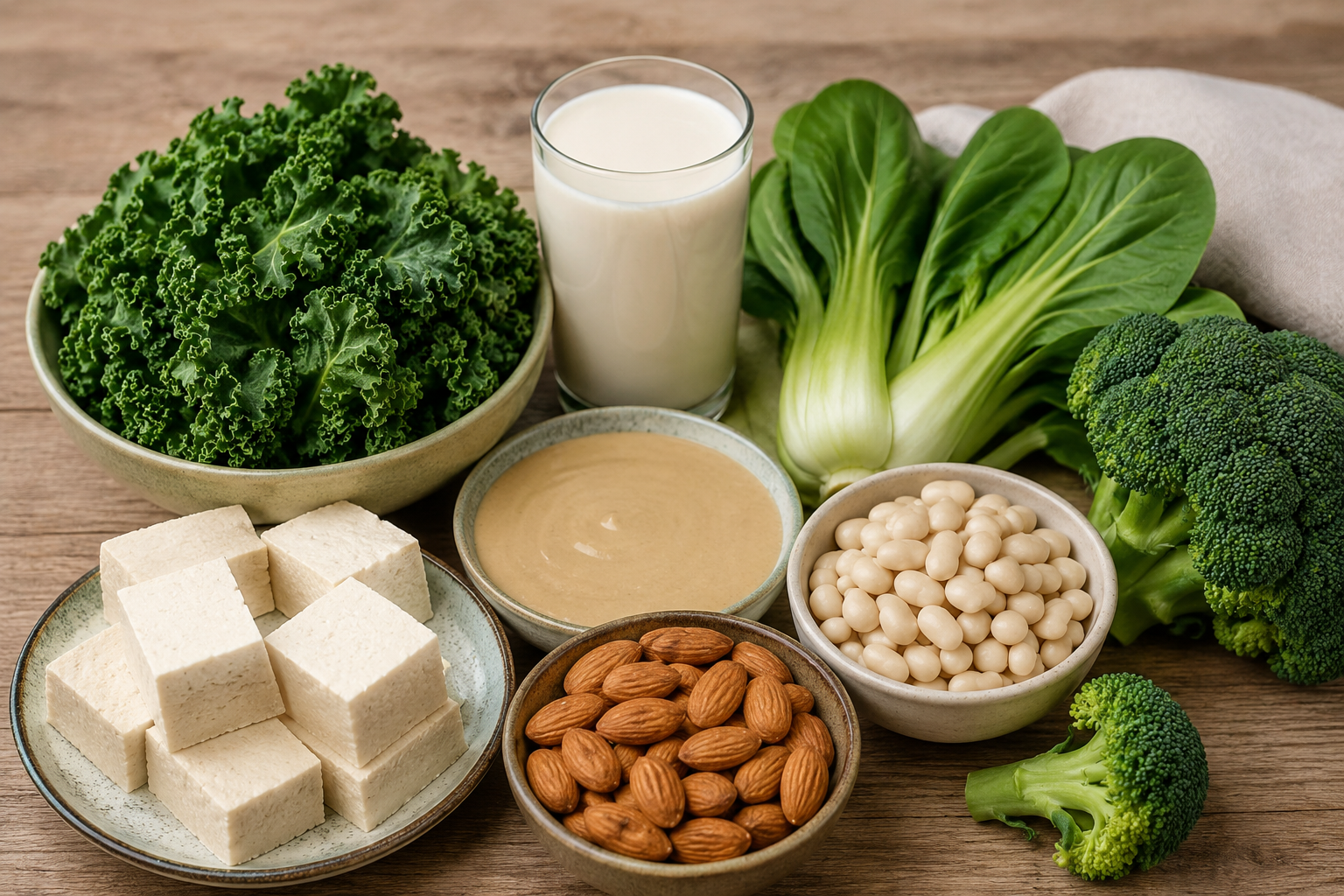
Calcium-rich plant foods such as tofu, tahini, almonds and green vegetables

Calcium

  • Good for your bones.
  • Important for your teeth.
  • Supports muscles and nerves.
Guideline

About 1,200 mg per day, depending on your age.

Where can you find it?

Plant-based sources per 100 grams

Amounts are averages. Fortified products vary by brand, so always check the label.
  • Calcium-set tofu: ±350 mg
  • Tahini: ±420 mg
  • Almonds: ±265 mg
  • Kale: ±150 mg
  • Bok choy: ±105 mg
  • White beans: ±90 mg
  • Broccoli: ±45 mg
  • Fortified soy milk: often ±120 mg per 100 ml
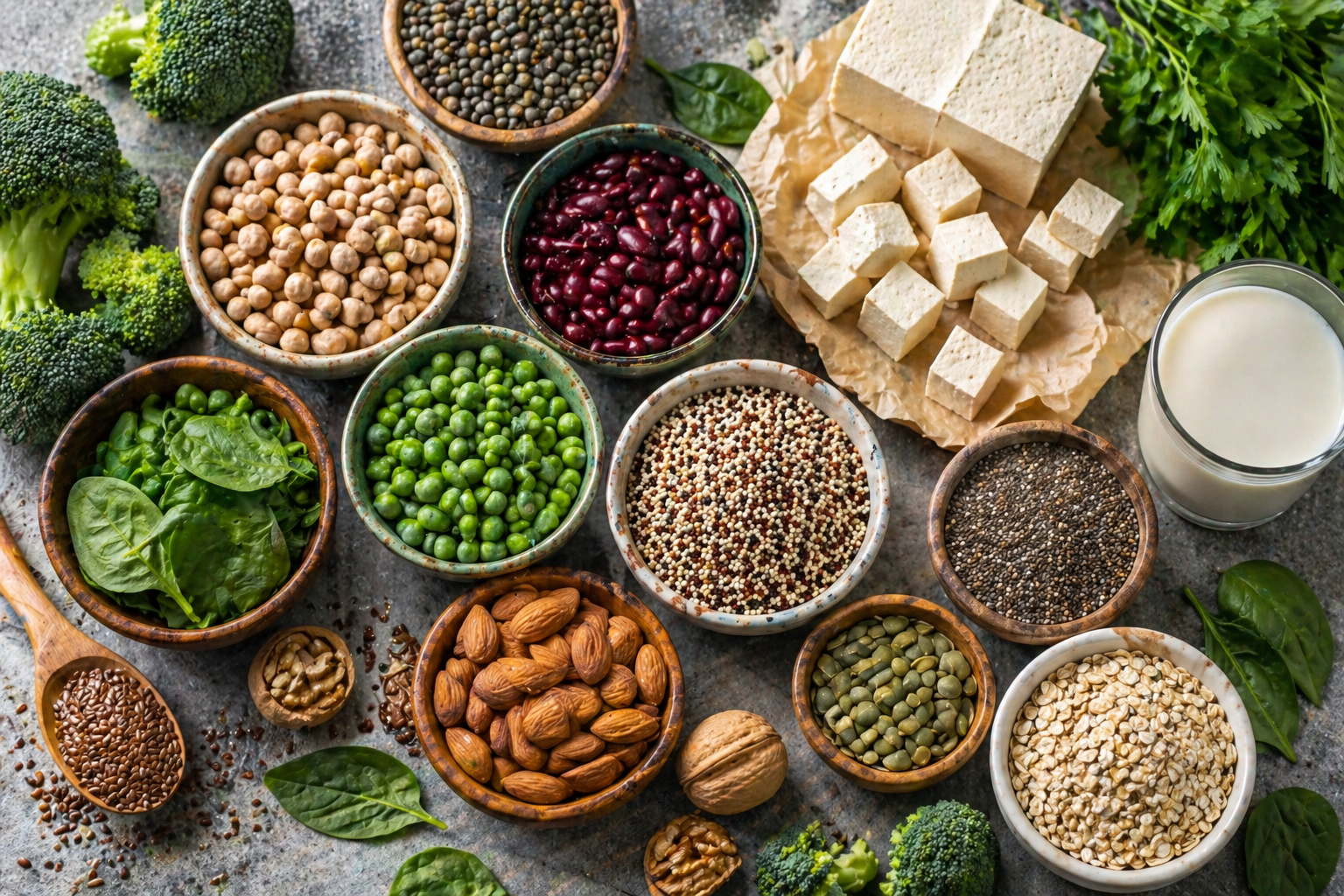
Protein-rich plant foods such as tofu, tempeh, lentils, beans and oats

Protein

  • Supports muscle growth.
  • Helps with recovery.
  • Important for your immune system.
Guideline

About 0.8 grams per kilogram of body weight per day. This depends on your age, weight and how much you exercise.

Where can you find it?

Plant-based sources per 100 grams

Bodybuilders and elite athletes can get their protein from plants too. What matters most is eating enough and combining different foods throughout the day.

  • Seitan: ±25 g
  • Tempeh: ±19 g
  • Tofu: ±12 g
  • Cooked lentils: ±9 g
  • Cooked chickpeas: ±9 g
  • Cooked beans: ±8 g
  • Oats: ±13 g
  • Peanut butter: ±25 g
Iron-rich plant foods such as pumpkin seeds, lentils, tofu and spinach

Iron

  • Carries oxygen around your body.
  • Important for energy.
  • Supports concentration.
Guideline

About 8 mg per day. For women aged 14 to 50, it is about twice as much.

Where can you find it?

Plant-based sources per 100 grams

Combine iron-rich plant foods with vitamin C, such as bell pepper, citrus fruit or other fruit. This helps your body absorb iron more effectively.
  • Pumpkin seeds: ±8.8 mg
  • Sesame seeds: ±14.6 mg
  • Tofu: ±2.7 mg
  • Tempeh: ±2.7 mg
  • Cooked lentils: ±3.3 mg
  • Cooked chickpeas: ±2.9 mg
  • Oats: ±4.7 mg
  • Spinach: ±2.7 mg
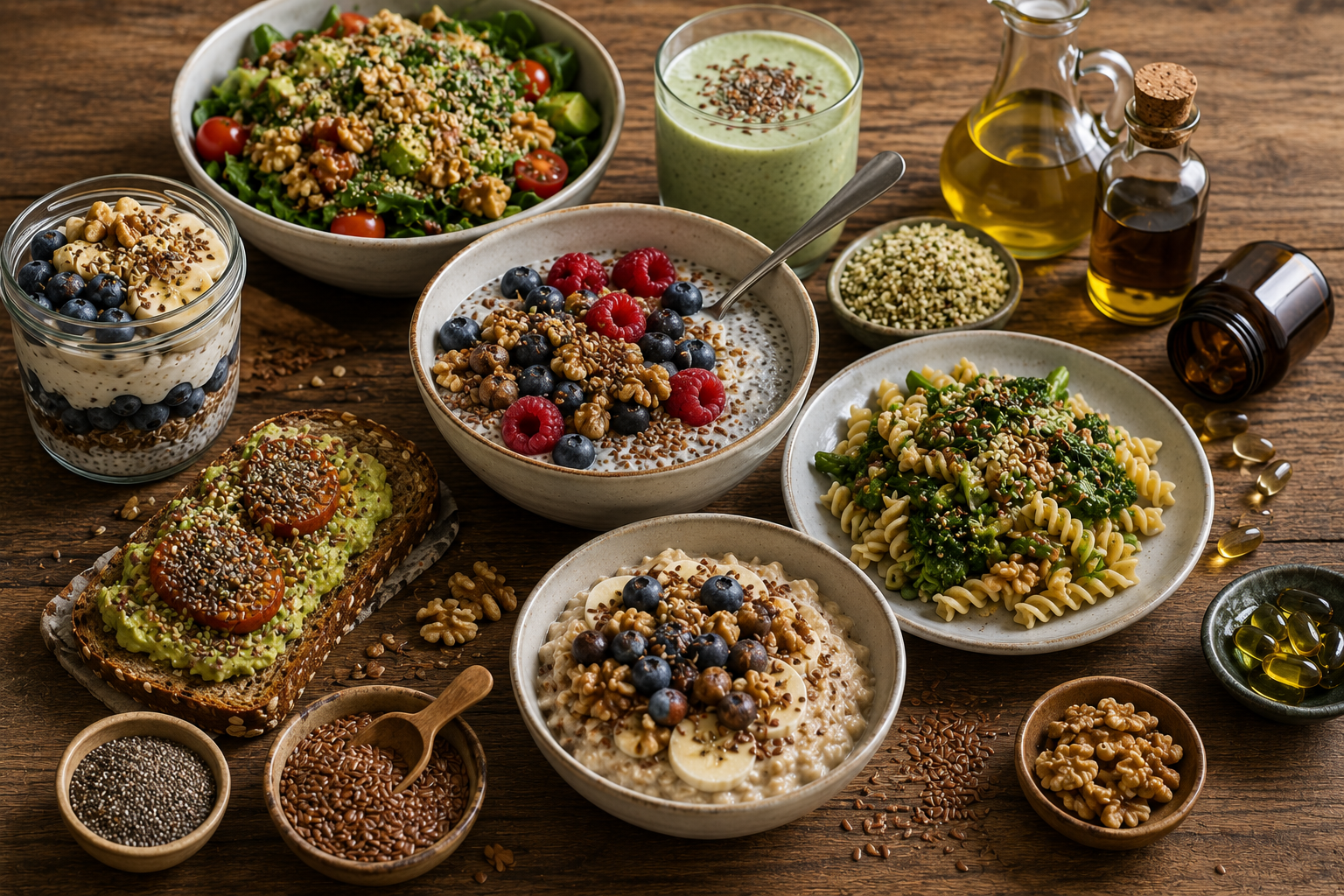
Omega-3 sources such as flaxseed, chia seeds, walnuts and algae oil

Omega 3

  • Supports your heart and brain.
  • Helps reduce inflammation.
  • Important as part of a healthy fat intake.
Guideline

Men: about 1.6 grams per day. Women: about 1.1 grams per day.

Where can you find it?

Plant-based sources per 100 grams

Flaxseed, chia seeds and walnuts provide ALA. For DHA and EPA, many people choose a plant-based algae oil supplement.
  • Flaxseed: ±22 g ALA
  • Chia seeds: ±18 g ALA
  • Walnuts: ±9 g ALA
  • Hemp seeds: ±9 g ALA
  • Rapeseed oil: ±9 g ALA
  • Flaxseed oil: ±53 g ALA
  • Algae oil: amount varies by supplement
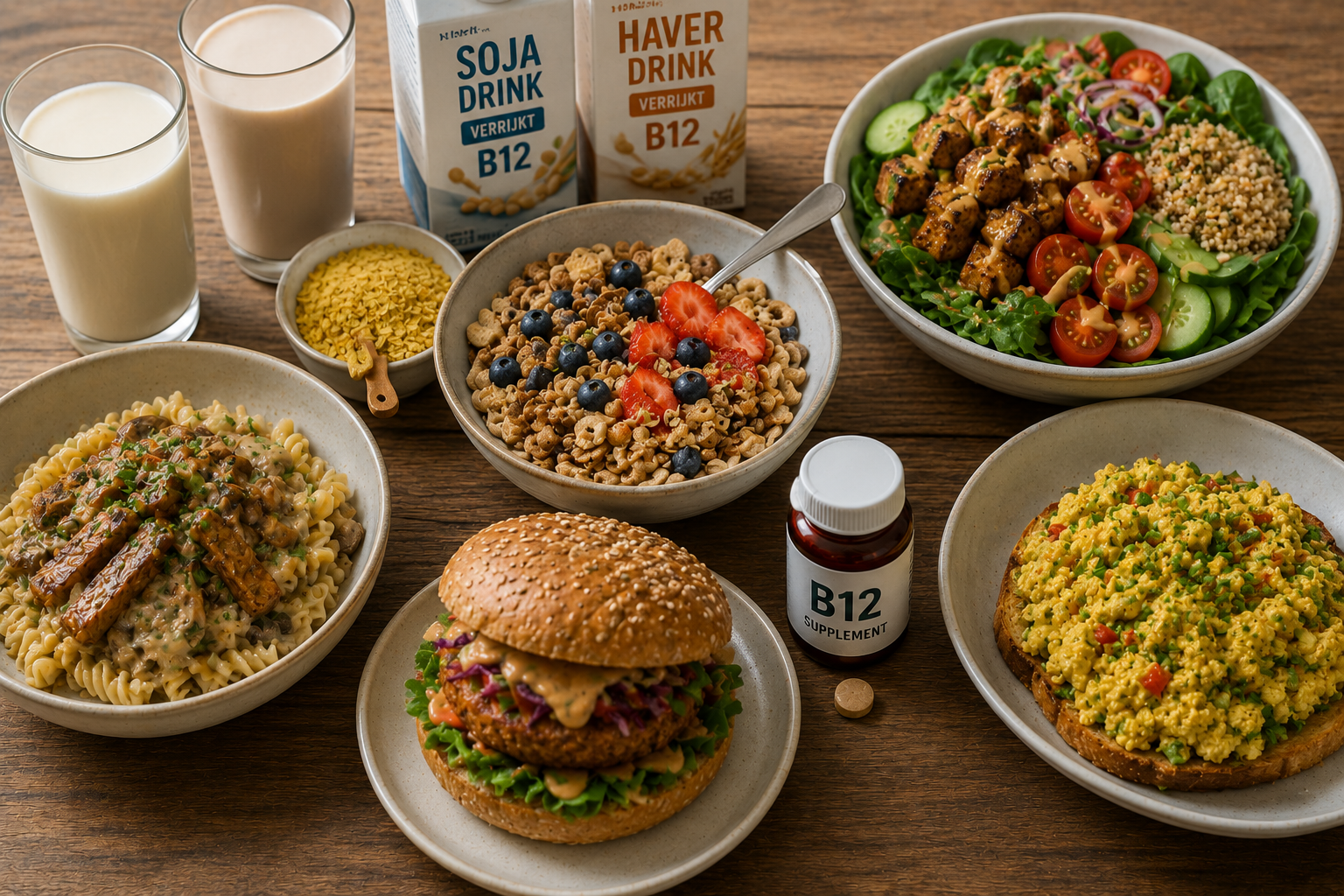
Vitamin B12 from supplements and fortified plant-based products

Vitamin B12

  • Important for a healthy nervous system.
  • Supports energy production.
  • Needed to produce red blood cells.
Guideline

About 2.4 mcg per day. Teenagers and pregnant women need slightly more.

Where can you find it?

Plant-based sources per 100 grams

B12 comes from bacteria in soil and water. Our food and drinking water are very clean today, so we get very little of it this way. That is why a supplement or fortified food is important.

  • B12 supplement: amount varies by tablet
  • Nutritional yeast with B12: check the label
  • Fortified soy milk: often ±0.4 mcg per 100 ml
  • Fortified oat milk: often ±0.4 mcg per 100 ml
  • Fortified meat substitutes: check the label
  • Fortified breakfast cereals: check the label
Vitamin D from sunlight, mushrooms, supplements and fortified products

Vitamin D

  • Supports bones and teeth.
  • Important for muscles.
  • Supports the immune system.
Guideline

About 20 mcg per day, depending on age, weight, skin tone and exposure to sunlight.

Where can you find it?

Plant-based sources per 100 grams

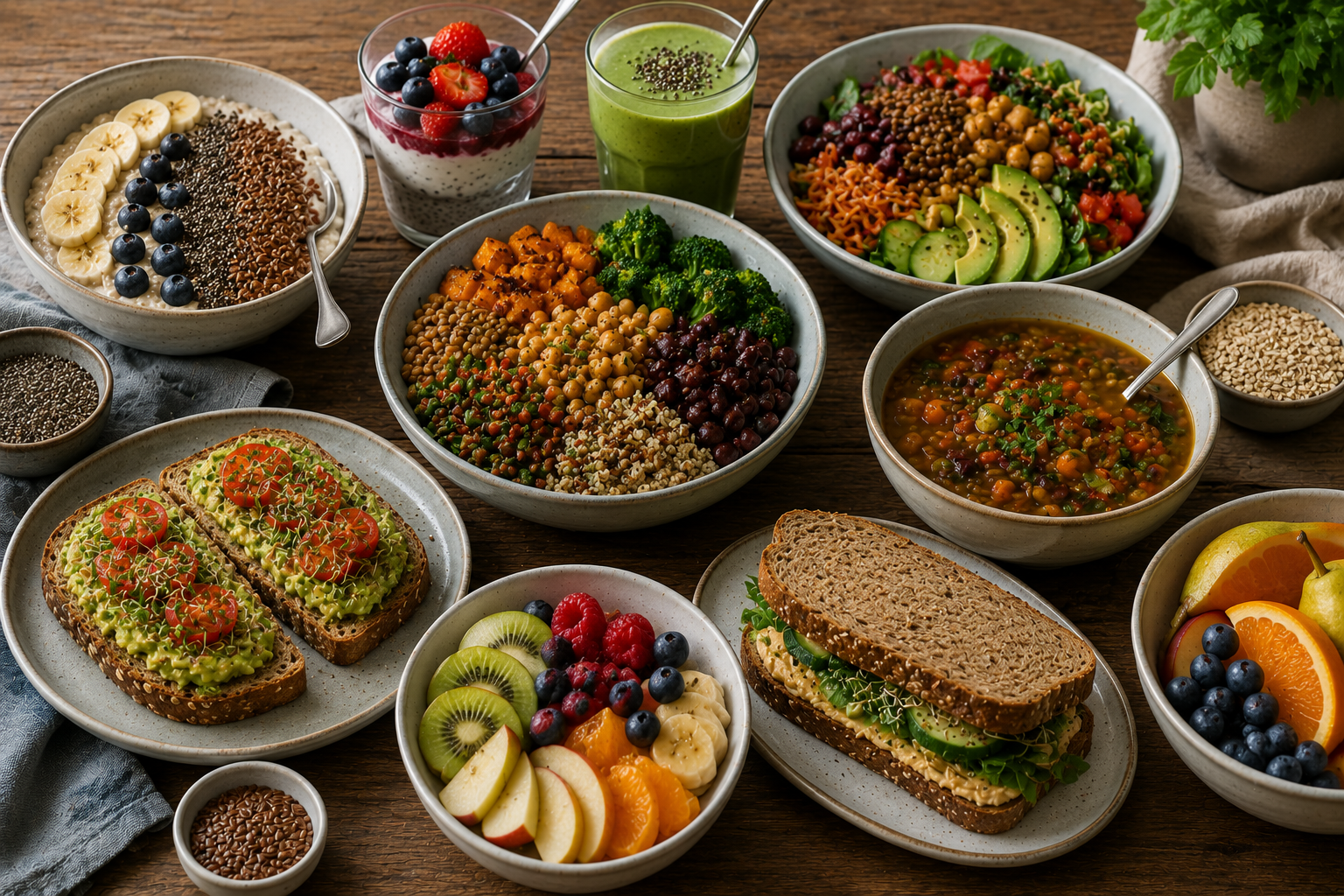
Your body also produces vitamin D when exposed to sunlight. You can also choose fortified products or a supplement.
  • Sunlight: no nutritional value per 100 g
  • UV-exposed mushrooms: often ±10 to 30 mcg
  • Fortified soy milk: often ±0.75 mcg per 100 ml
  • Fortified oat milk: often ±0.75 mcg per 100 ml
  • Fortified margarine: check the label
  • Vegan D3 from lichen: amount varies by supplement
Fibre-rich plant foods such as chia seeds, flaxseed, oats, legumes and fruit

Dietary fibre

  • Important for digestion.
  • Helps maintain stable blood sugar levels.
  • Helps you feel full.
Guideline

About 30 grams per day. Children usually need slightly less.

Where can you find it?

Plant-based sources per 100 grams

Fibre is found only in plant foods. Animal products do not contain dietary fibre.
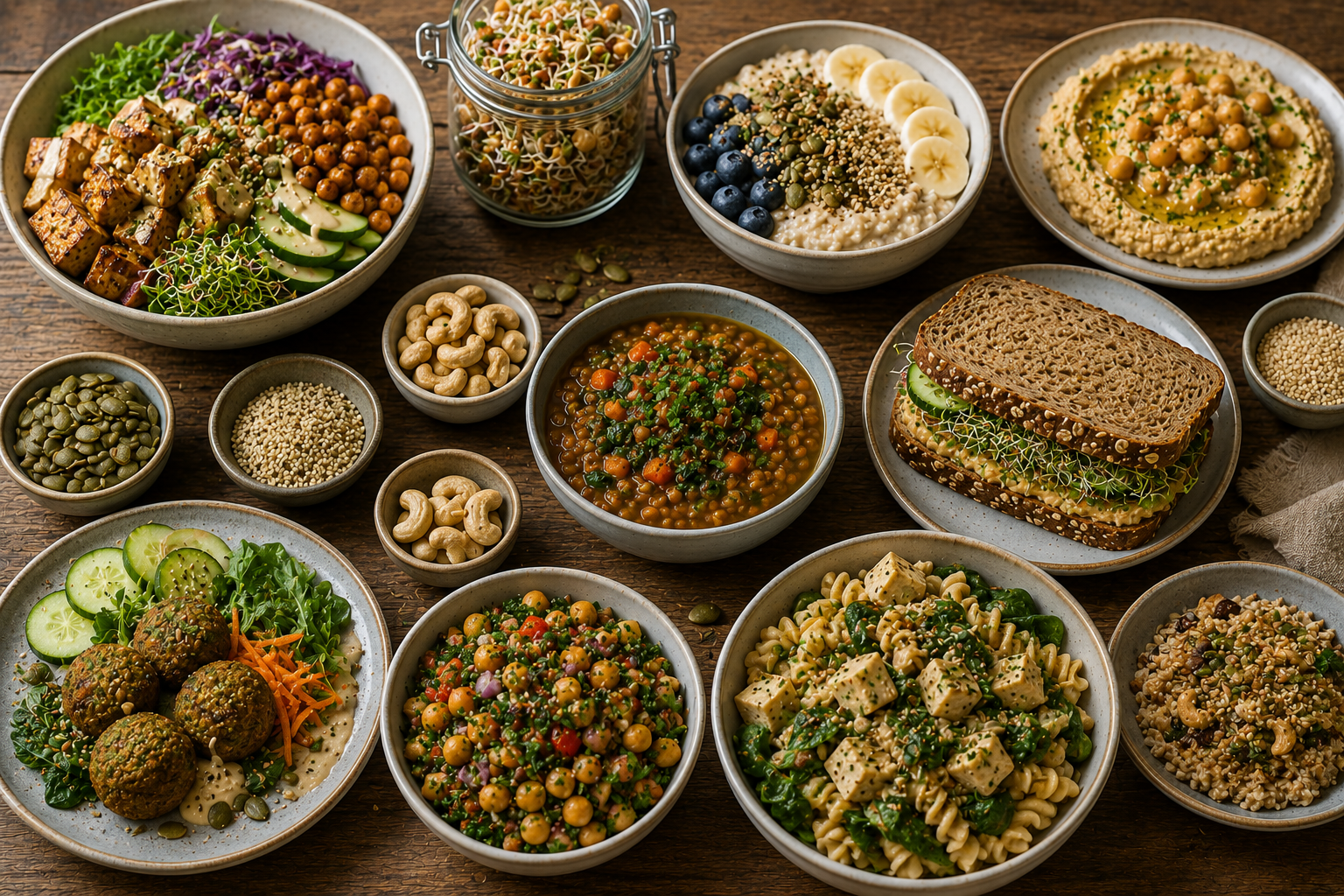
  • Chia seeds: ±34 g
  • Flaxseed: ±27 g
  • Oats: ±10 g
  • Cooked lentils: ±8 g
  • Cooked chickpeas: ±8 g
  • Cooked beans: ±6 to 9 g
  • Wholegrain bread: ±6 to 7 g
  • Fruit: often ±2 to 4 g
Zinc-rich plant foods such as pumpkin seeds, sesame seeds, hemp seeds, cashews and tofu

Zinc

  • Important for your immune system.
  • Helps with recovery from injuries.
  • Supports healthy hair, nails and skin.
Guideline

Men: about 11 mg per day. Women: about 8 mg per day.

Where can you find it?

Plant-based sources per 100 grams

Zinc is found in many legumes, grains, nuts and seeds. Soaking, sprouting or fermenting can improve absorption.

  • Pumpkin seeds: ±7.8 mg
  • Sesame seeds: ±7.8 mg
  • Hemp seeds: ±10 mg
  • Cashews: ±5.6 mg
  • Oats: ±4 mg
  • Cooked lentils: ±1.3 mg
  • Cooked chickpeas: ±1.5 mg
  • Tofu: ±1 to 2 mg

No nutrient found. Try calcium, iron, omega 3, B12 or zinc, for example.

Compare per 100 grams

See where nutrients are found.

Open a nutrient to compare six familiar products side by side. The bars animate over two seconds once the comparison becomes visible.

Good to know: the longest bar always represents the product with the highest value within that nutrient. So do not compare bar lengths across different nutrients.
Ca

Calcium

3 plant-based and 3 animal-based examples per 100 g or 100 ml

Plant-basedAnimal-based

Plant-based products

Tahini420 mg
Tofu (calcium-set)350 mg
Almonds265 mg

Animal products

Plain yoghurt121 mg
Cow's milk120 mg
Egg56 mg

Values are rounded averages per 100 grams, unless 100 ml is stated. Product type, brand and preparation can affect the result.

P

Protein

3 plant-based and 3 animal-based examples per 100 g or 100 ml

Plant-basedAnimal-based

Plant-based products

Seitan25 g
Peanut butter25 g
Tempeh19 g

Animal products

Salmon20 g
Egg13 g
Plain yoghurt3.8 g

Values are rounded averages per 100 grams, unless 100 ml is stated. Product type, brand and preparation can affect the result.

Fe

Iron

3 plant-based and 3 animal-based examples per 100 g or 100 ml

Plant-basedAnimal-based

Plant-based products

Sesame seeds14.6 mg
Pumpkin seeds8.8 mg
Oats4.7 mg

Animal products

Beef2.6 mg
Egg1.8 mg
Chicken breast1.3 mg

Values are rounded averages per 100 grams, unless 100 ml is stated. Product type, brand and preparation can affect the result.

Ω

Omega 3

3 plant-based and 3 animal-based examples per 100 g or 100 ml

Plant-basedAnimal-based

Plant-based products

Flaxseed (ALA)22 g
Chia seeds (ALA)18 g
Walnuts (ALA)9 g

Animal products

Mackerel (EPA+DHA)2.7 g
Salmon (EPA+DHA)2.3 g
Egg (total)0.1 g

Plant-based values mainly show ALA; fish values mainly show EPA and DHA. These are different forms of omega 3, so this is not a like-for-like comparison of absorption.

B12

Vitamin B12

3 plant-based and 3 animal-based examples per 100 g or 100 ml

Plant-basedAnimal-based

Plant-based products

Fortified nutritional yeast20 mcg
Fortified breakfast cereals6 mcg
Fortified soy drink (100 ml)0.4 mcg

Animal products

Salmon3.0 mcg
Egg1.1 mcg
Cow's milk (100 ml)0.45 mcg

B12 is naturally present in very little plant food. Therefore choose reliable fortified products and/or a supplement, and check the label.

D

Vitamin D

3 plant-based and 3 animal-based examples per 100 g or 100 ml

Plant-basedAnimal-based

Plant-based products

UV-exposed mushrooms20 mcg
Fortified margarine7.5 mcg
Fortified soy drink (100 ml)0.75 mcg

Animal products

Salmon13 mcg
Egg2.0 mcg
Cheese0.6 mcg

Vitamin D varies greatly by type, preparation, UV treatment and fortification. Always check the label on fortified products.

V

Dietary fibre

3 plant-based and 3 animal-based examples per 100 g or 100 ml

Plant-basedAnimal-based

Plant-based products

Chia seeds34 g
Flaxseed27 g
Oats10 g

Animal products

Cow's milk0 g
Egg0 g
Salmon0 g

Dietary fibre occurs only in plant foods. The animal-product bars therefore remain at zero.

Zn

Zinc

3 plant-based and 3 animal-based examples per 100 g or 100 ml

Plant-basedAnimal-based

Plant-based products

Hemp seeds10 mg
Pumpkin seeds7.8 mg
Cashews5.6 mg

Animal products

Beef4.8 mg
Cheese3.1 mg
Egg1.3 mg

Values are rounded averages per 100 grams, unless 100 ml is stated. Product type, brand and preparation can affect the result.

Practical basics

Plant-based eating does not have to be complicated.

Think of it as a simple building plan. Open a group and you can immediately see what it adds to your day. This makes it possible to build a balanced plant-based diet without complicated schedules.

The basics are straightforward: choose foods from several groups each day, vary your choices throughout the week, and use fortified products or supplements where practical and sensible.
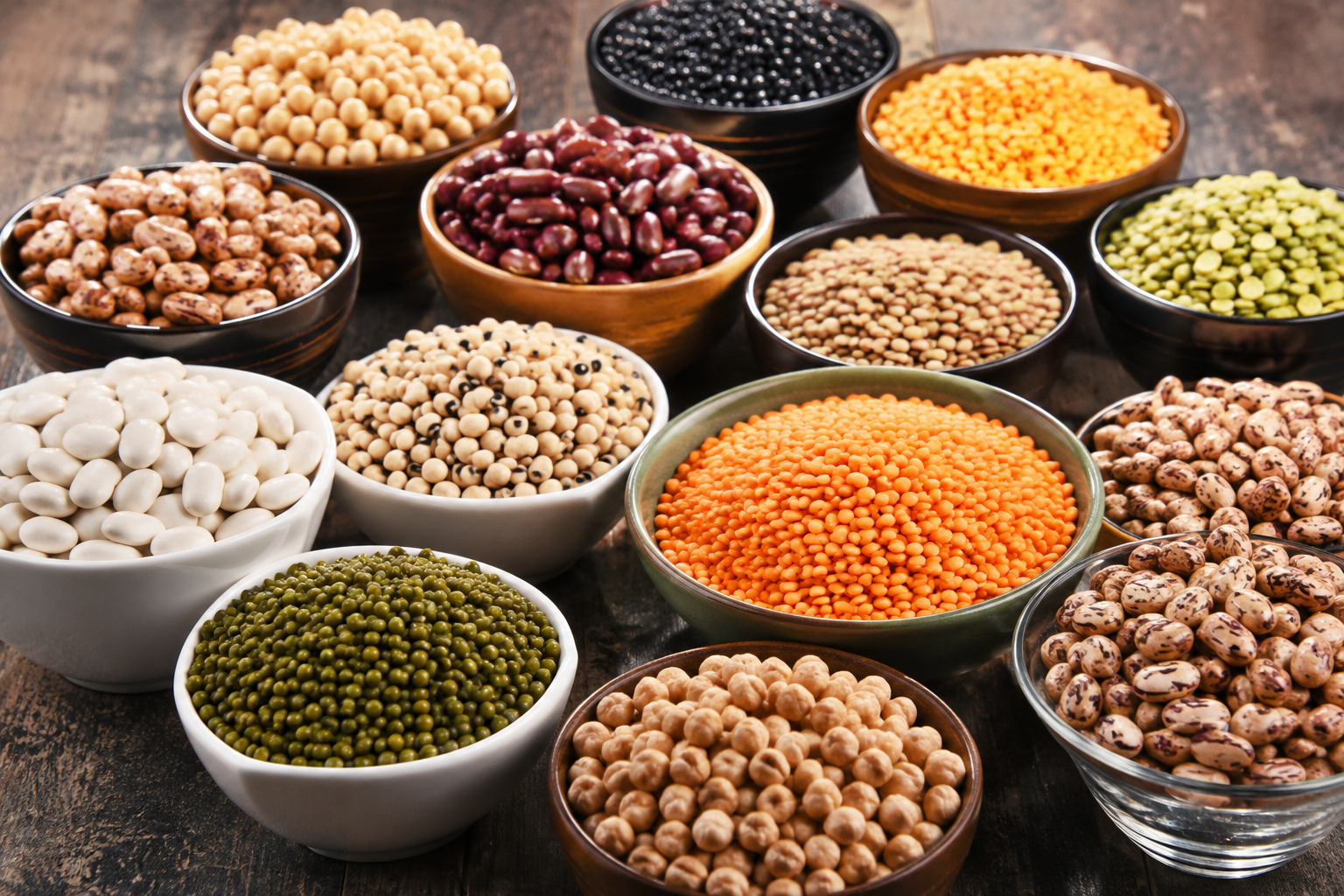
Legumes such as beans, lentils and chickpeas

Legumes

A solid base for protein, iron, zinc and fibre.
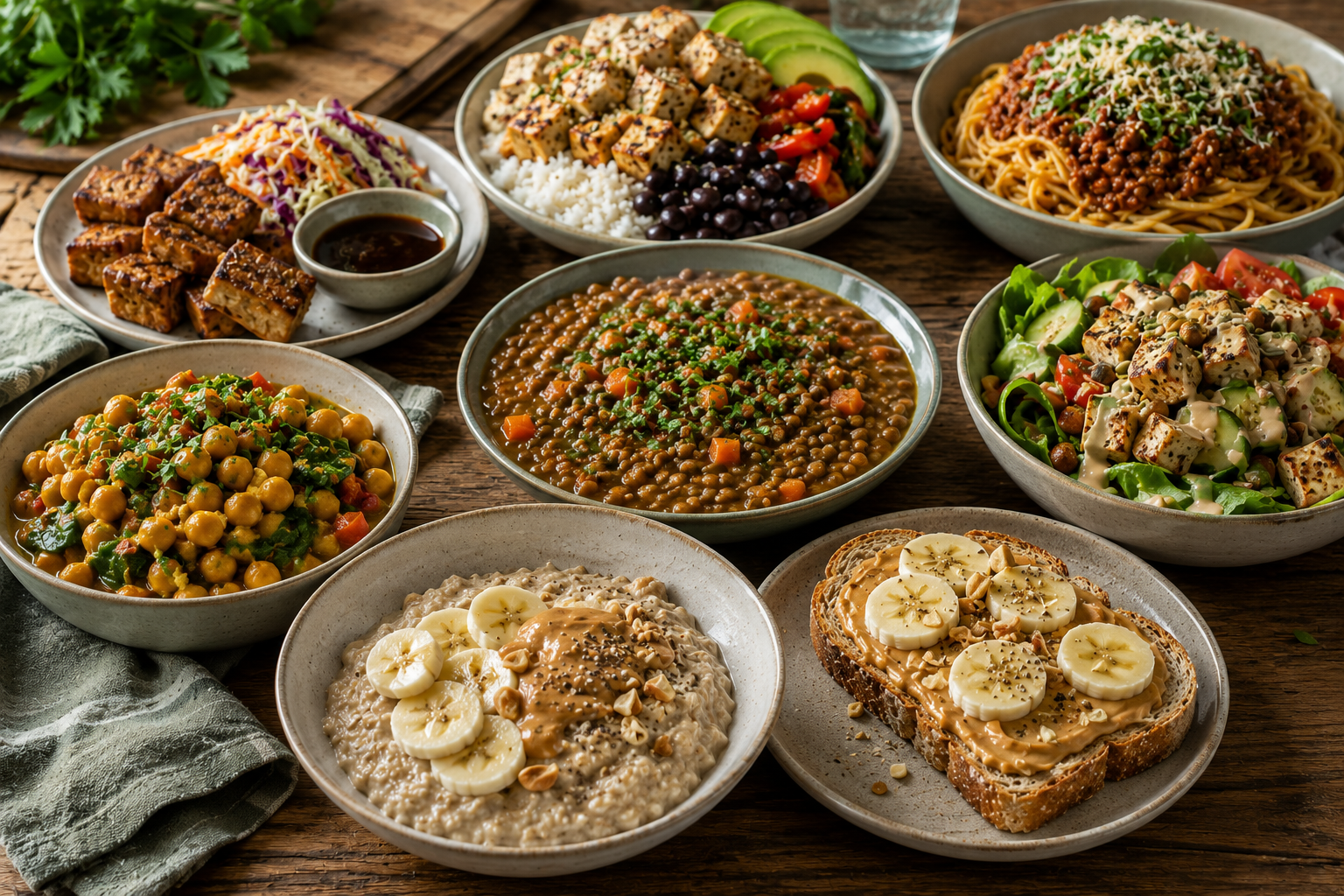
  • Use lentils, beans, chickpeas, tofu or tempeh in curries, wraps, salads and pasta sauces.
  • A useful rule of thumb: add a clear portion of legumes to one main meal each day.
Protein · iron · zinc · fibre
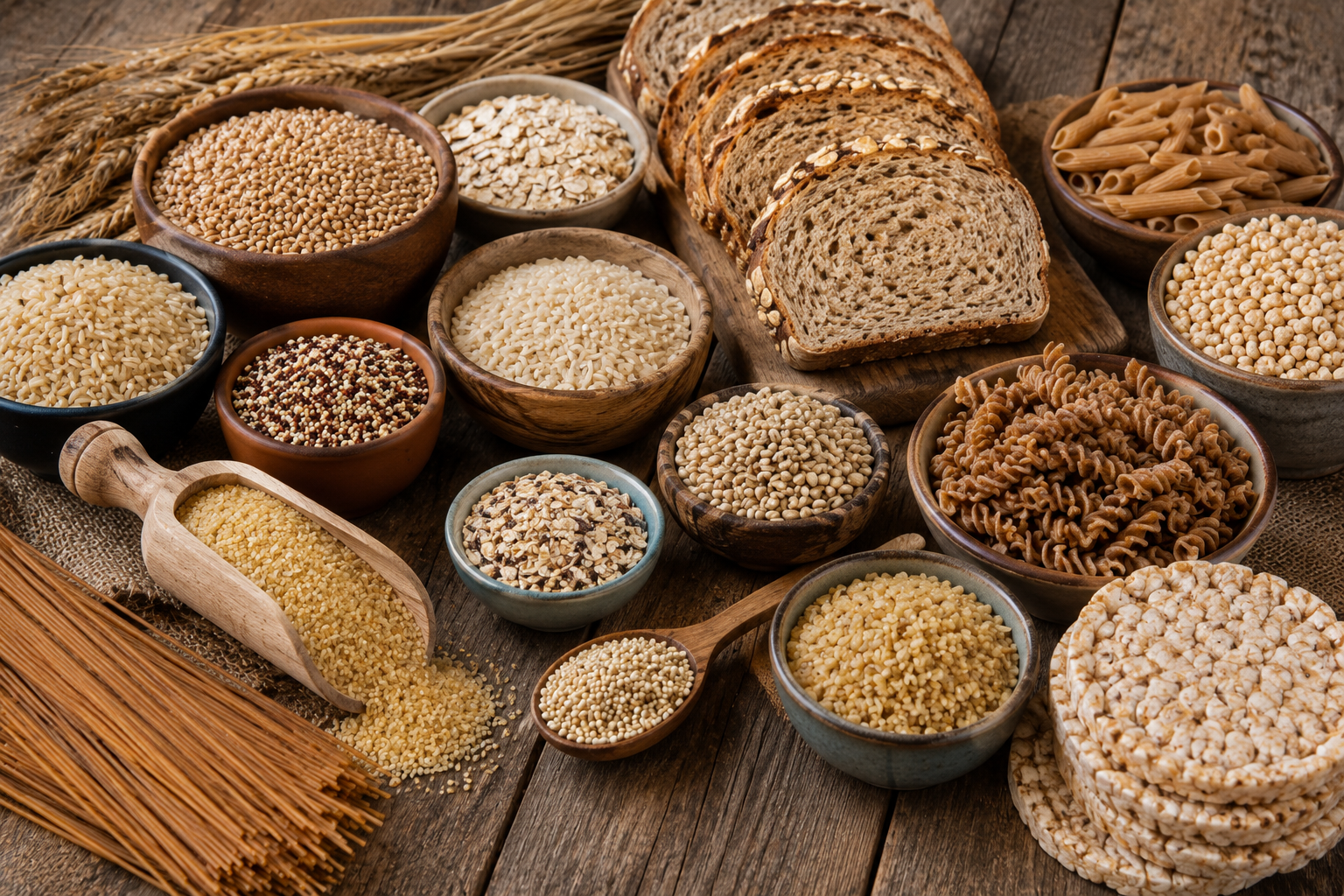
Whole grains such as oats, rice and wholegrain bread

Whole grains

For energy, fibre and minerals throughout the day.
  • Choose oats, wholegrain bread, brown rice, wholewheat pasta, bulgur or quinoa regularly.
  • Combine grains with legumes or nuts and seeds for a nutritious meal.
Energy · fibre · iron · zinc
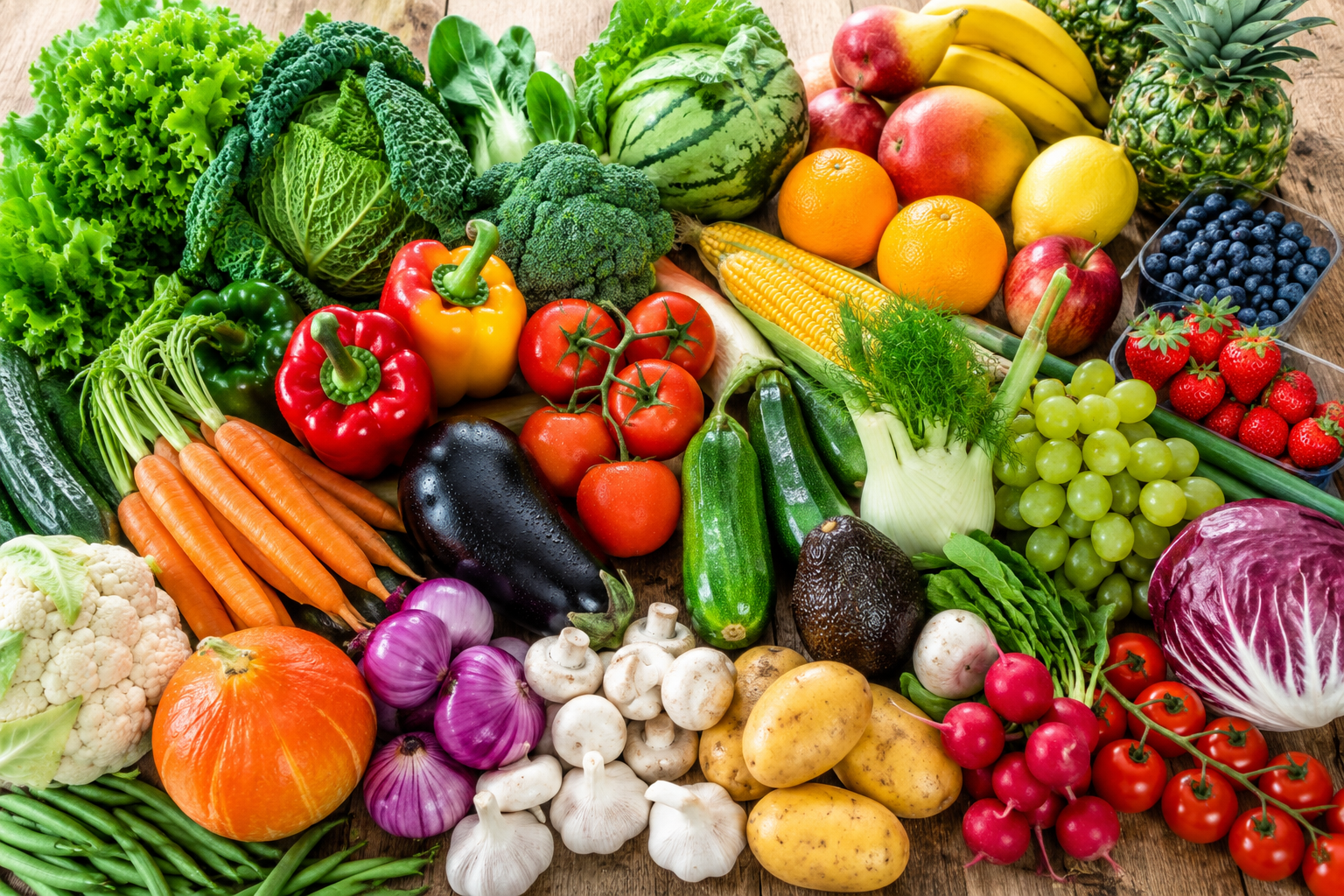
Vegetables and fruit in different colours

Vegetables and fruit

Colour on your plate helps provide vitamins, minerals and antioxidants.
  • Vary the colours: leafy greens, cabbage varieties, bell peppers, berries, citrus fruits and seasonal fruit.
  • Vitamin C from vegetables and fruit helps your body absorb iron from plant foods more effectively.
Vitamins · minerals · vitamin C
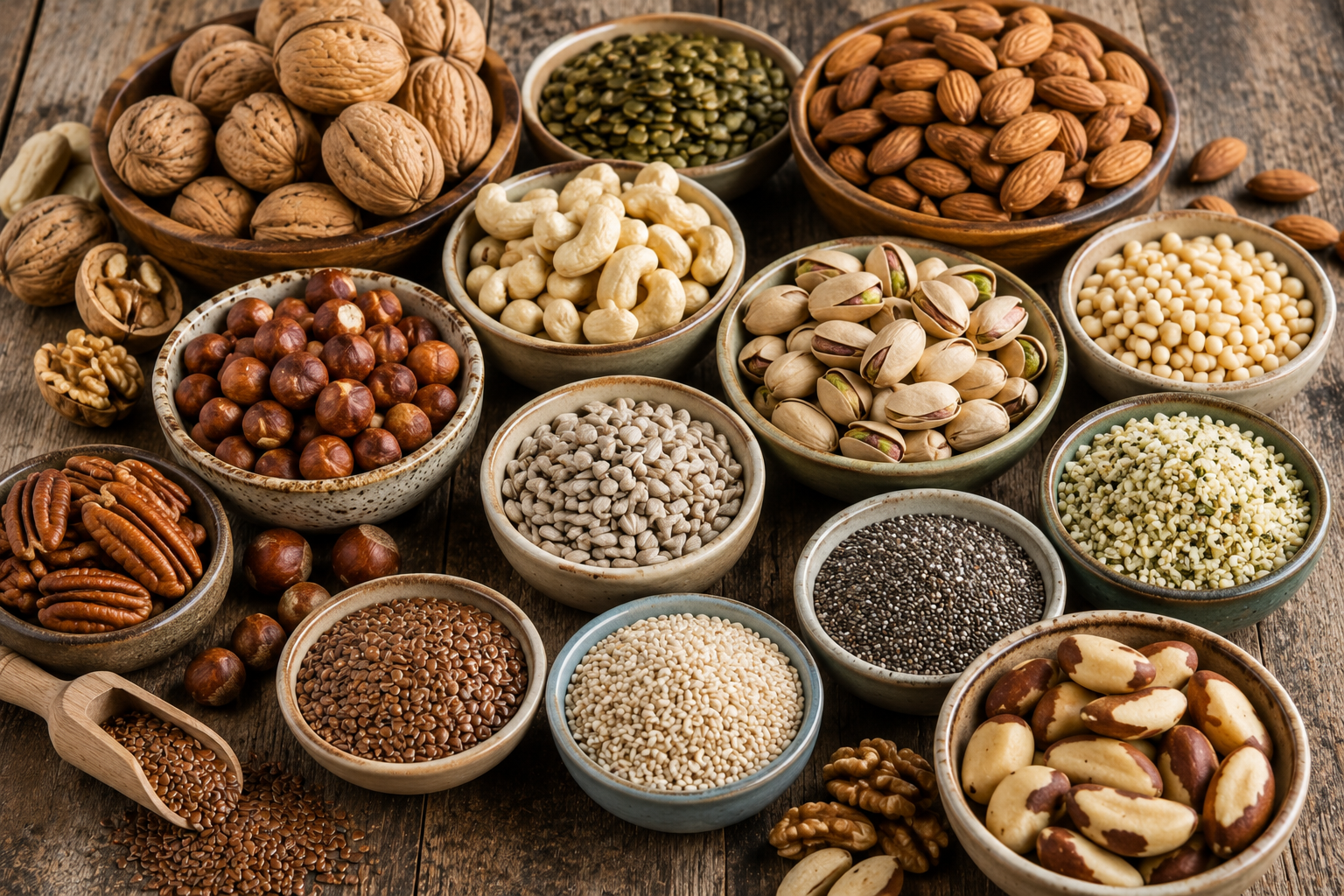
Nuts and seeds such as walnuts, pumpkin seeds and chia seeds

Nuts and seeds

Small portions provide plenty of healthy fats and minerals.
  • Think of flaxseed, chia seeds, walnuts, pumpkin seeds, sesame seeds, tahini and peanut butter.
  • Add them to breakfast, salads, sauces or sandwich toppings for extra nutritional value.
Omega 3 · zinc · calcium · iron
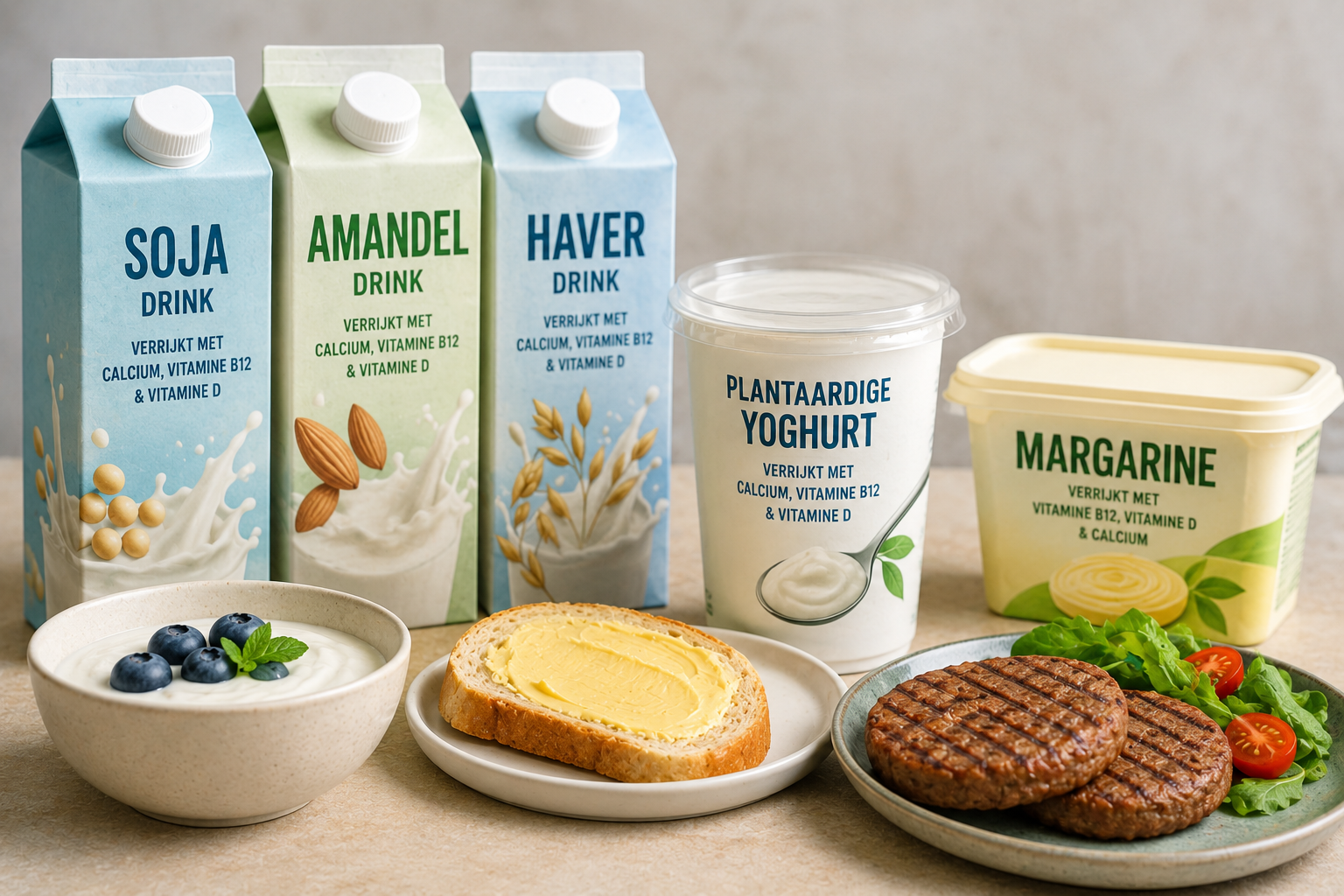
Fortified plant-based products such as plant milk and yoghurt

Fortified products

An easy way to include calcium, B12 and vitamin D.
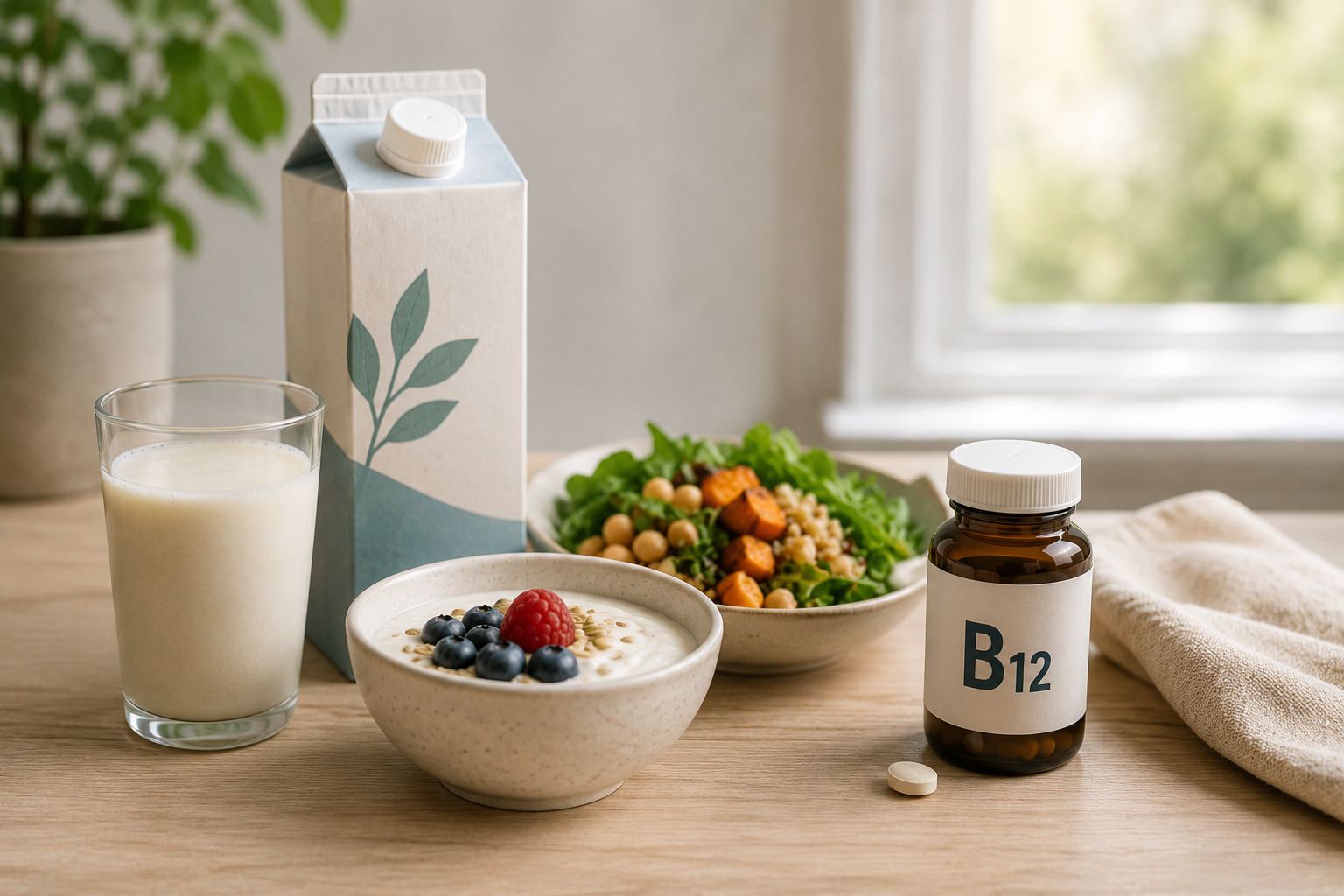
  • Check the label on plant-based milk, yoghurt, margarine and some meat substitutes.
  • Prefer products fortified with calcium and vitamin B12; some also contain vitamin D.
Calcium · B12 · vitamin D
Supplements such as tablets and capsules

Supplements

A simple safety net for nutrients you want to supplement specifically.

  • For B12, a supplement or reliable fortified food is important within a plant-based diet.
  • Vitamin D can come from sunlight, fortified products or supplements; in practice, supplementation is useful for many people.
B12 · vitamin D · algae oil

Nutrients are not an excuse.

We can learn where nutrients are found. And once we know that, choosing plant-based becomes much easier. We owe it to the animals.

Get started
Sources

Below, the sources are grouped by nutrient or background claim.

Protein

  1. Food and Agriculture Organization of the United Nations. (2016). Protein quality assessment in follow-up formula for young children and ready to use therapeutic foods. PubMed. https://pubmed.ncbi.nlm.nih.gov/26797090/
  2. Great Vegan Athletes. (n.d.). Vegan athletes. https://www.greatveganathletes.com/

Iron

  1. Academy of Nutrition and Dietetics. (n.d.). Iron. EatRight. https://www.eatright.org/health/essential-nutrients/minerals/iron

Calcium

  1. National Institutes of Health, Office of Dietary Supplements. (n.d.). Calcium: Fact sheet for consumers. https://ods.od.nih.gov/factsheets/Calcium-Consumer/

Dietary fibre

  1. National Health Service. (n.d.). How to get more fibre into your diet. https://www.nhs.uk/live-well/eat-well/digestive-health/how-to-get-more-fibre-into-your-diet/

Omega 3

  1. National Institutes of Health, Office of Dietary Supplements. (n.d.). Omega-3 fatty acids: Fact sheet for health professionals. https://ods.od.nih.gov/factsheets/Omega3FattyAcids-HealthProfessional/

Zinc

  1. National Institutes of Health, Office of Dietary Supplements. (n.d.). Zinc: Fact sheet for consumers. https://ods.od.nih.gov/factsheets/Zinc-Consumer/

Vitamin D

  1. Zorgwijzer. (n.d.). Vitamin D. https://www.zorgwijzer.nl/zorgwijzers/vitamine-d
  2. Thuisarts.nl. (n.d.). I may need extra vitamin D. https://www.thuisarts.nl/vitamine-d/ik-heb-misschien-extra-vitamine-d-nodig

Vitamin B12

  1. National Institutes of Health, Office of Dietary Supplements. (n.d.). Vitamin B12: Fact sheet for consumers. https://ods.od.nih.gov/factsheets/VitaminB12-Consumer/

Comparison charts: plant-based and animal products

  1. U.S. Department of Agriculture, Agricultural Research Service. (n.d.). FoodData Central. Used for average nutritional values per 100 grams or 100 ml for products including milk, yoghurt, egg, cheese, beef, chicken and salmon. https://fdc.nal.usda.gov/
  2. National Institutes of Health, Office of Dietary Supplements. (2025). Vitamin B12: Fact sheet for health professionals. https://ods.od.nih.gov/factsheets/VitaminB12-HealthProfessional/
  3. National Institutes of Health, Office of Dietary Supplements. (2025). Vitamin D: Fact sheet for health professionals. https://ods.od.nih.gov/factsheets/VitaminD-HealthProfessional/
  4. National Institutes of Health, Office of Dietary Supplements. (n.d.). Omega-3 fatty acids: Fact sheet for health professionals. https://ods.od.nih.gov/factsheets/Omega3FattyAcids-HealthProfessional/
  5. Values for fortified plant-based products vary by brand. The values shown are representative examples; always check the label before purchasing.

Background: animal products are not necessary

  1. Dietitians Association of Australia. (accessed 15 February 2025). What is a vegetarian diet?
  2. Mayo Clinic. (2023). Vegetarian diet: How to get the best nutrition.
  3. Heart and Stroke Foundation of Canada. (accessed 15 February 2025). Vegetarian diets.
  4. Harvard Medical School. (2024). Becoming a vegetarian.
  5. British Dietetic Association. (2021). Vegetarian, vegan and plant-based diet.
  6. British Nutrition Foundation. (accessed 15 February 2025). Vegetarian and vegan diets.
  7. National Health Service. (2022). The vegan diet.
  8. American Dietetic Association. (2009). Position of the American Dietetic Association: Vegetarian diets.
  9. Melina, V., Winston, G., & Levin, S. (2016). Position of the Academy of Nutrition and Dietetics: Vegetarian diets. Journal of the Academy of Nutrition and Dietetics, 116(12), 1970–1980.
  10. Health Council of the Netherlands. (2024). Healthy protein transition.